Can you put appliances in a skip?
If you have hired a skip for a kitchen refit or a clear-out, it is tempting to throw the old washing machine and oven in with everything else. In most cases you cannot. Here is why, and what to do with the appliances instead.
Key points
- Most skip hire firms will not accept electrical appliances, or charge extra and ask for them to be kept separate.
- Appliances are electrical waste and need to be kept apart from general waste so they can be recycled.
- Always ask the skip firm before an appliance goes in, and keep their answer in writing.
- The tip, a council bulky collection or retailer take-back can deal with appliances the skip cannot.
- A registered waste carrier can collect the appliances on their own, even with the skip already on the drive.
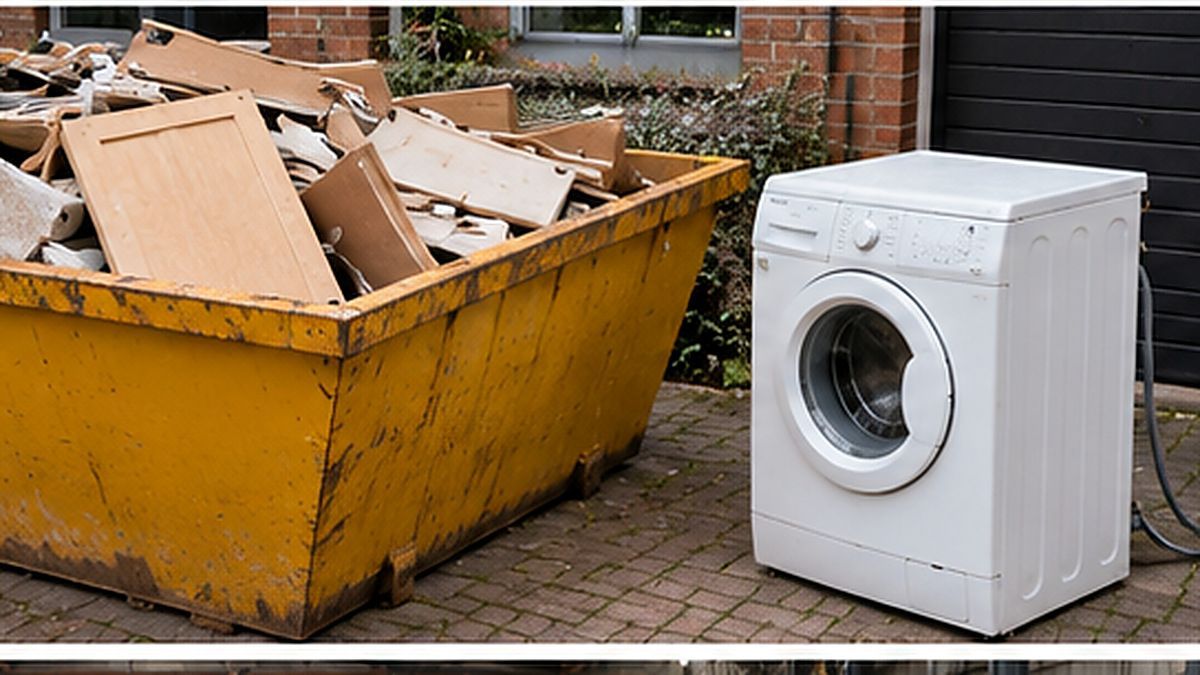
Can you put appliances in a skip? Usually not
The short answer is that most skip hire firms will not let you put electrical appliances in a skip. Some refuse them outright. Others take them for an extra charge, provided they are kept separate from the rest of the load rather than buried under rubble. Either way, the decision belongs to the skip firm, so the first step is always to ask.
That covers most of what comes out of a kitchen refit or a house clearance: a washing machine, a tumble dryer, a dishwasher, an oven, a hob, an extractor hood and the microwave from the worktop. If it has a plug, a cable or a motor, treat it as something the skip firm has to agree to before it goes in.
Why skip firms say no to electricals
Appliances are waste electrical and electronic equipment, or WEEE, and they must be kept separate from general waste so they can be recycled properly. A skip of mixed rubble, timber and plasterboard goes to a site set up to sort that kind of material. Electrical items need different handling, so a firm that finds a dishwasher in a skip has to pull it out and send it somewhere else.
That extra handling costs the skip firm time and money, which is why many pass the cost on or refuse the items altogether. Appliances are also heavy and bulky. A front loader with its concrete counterweight eats into any weight limit on the skip, and anything with water left in its drum or sump can leak into the rest of the load.
Appliances also contain parts that need treating with care, such as motors, circuit boards, cables and glass. Keeping them apart from the start is what allows the metals and plastics to be recovered instead of being lost among mixed building waste.
Skip firm said no to the appliances?
Send a photo of everything that needs to go and we reply with one fixed price for the lot. Two people carry it out and you pay once it is loaded.
What to ask the skip firm before you book
When you ring for a quote, list the appliances you expect to throw out and ask directly whether they can go in. If the answer is yes, ask whether there is a charge per item, whether they need to sit on top of the load and whether anything has to be drained or emptied first. Get the answer by email or write it down, so there is no dispute when the skip is picked up.
If the firm will not take appliances, plan around that before the work starts. Keep a corner of the garage or the drive clear for them, and make sure builders and helpers know not to throw them in. An appliance hidden in a skip may be found when the load is sorted, and you could be charged for it, which costs more than dealing with it properly from the outset.
Other ways to get rid of the appliances
If an appliance still works, selling it or giving it away keeps it in use, and buyers usually collect. If it does not, the household waste recycling centre, better known as the tip, usually takes large appliances in a separate electricals area. Many councils ask residents to book, and you may need a permit to arrive in a van or with a trailer.
Councils generally offer a bulky waste collection too. You book in advance, wait for a date and leave the appliance outside on the day, with the rules and charges set by each council. If you are buying replacements, the retailer has to offer a free way to dispose of each old appliance of the same type, though taking it from your home is often a separate, paid service. Our guide on whether retailers take old appliances away explains how that works.
Disconnect everything before it leaves the kitchen
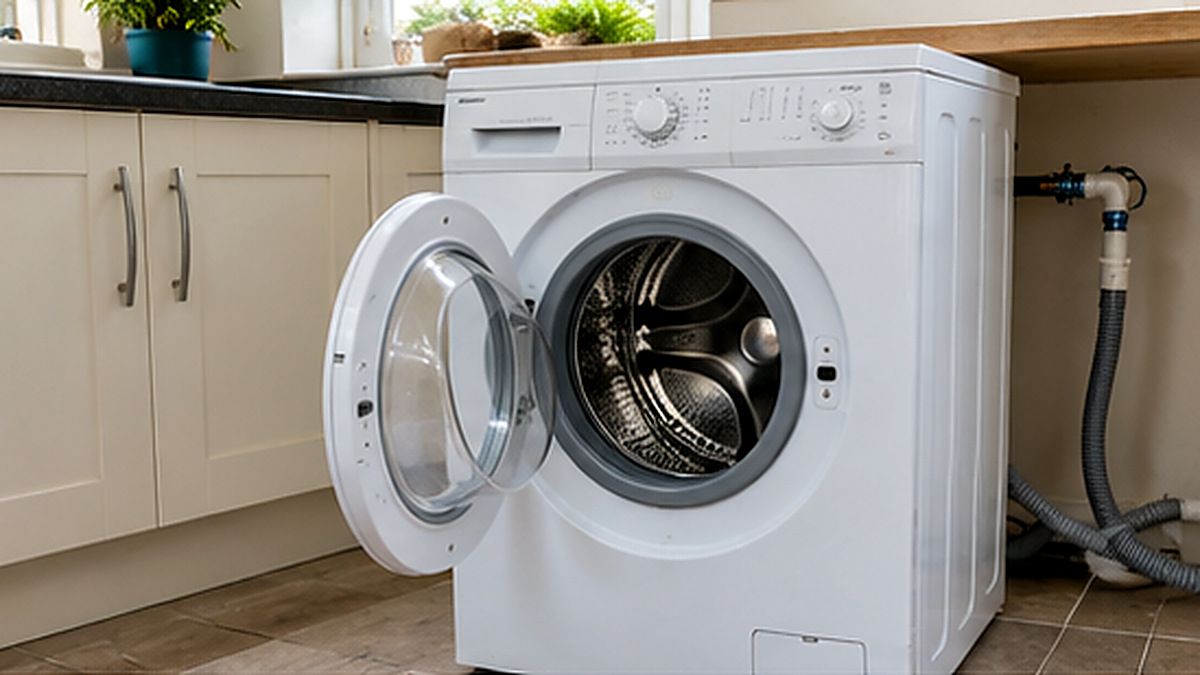
Whichever route you choose, the appliances have to be disconnected before anyone takes them. Washing machines and dishwashers should be unplugged, with the water off at the valves and the hoses and waste pipe removed. Tumble dryers need the vent hose taken off the wall, or the water container emptied on a condenser or heat pump model.
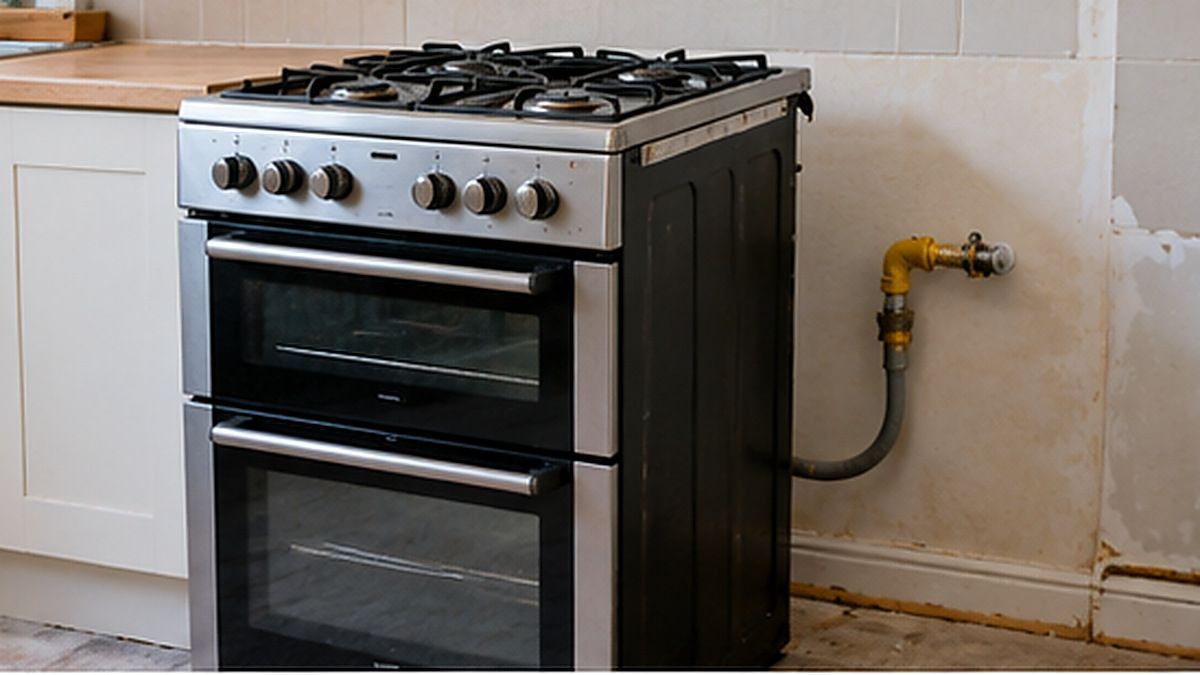
Cookers are different. A gas cooker must be disconnected and capped by a Gas Safe registered engineer, and a hard-wired cooker or built-in oven needs a qualified electrician, as our guide on how to dispose of a cooker explains. Integrated appliances should already be out of their cabinet slots. On a refit, the simplest plan is to have your fitter or plumber free everything early, so the appliances can go before the skip fills up.
Getting the appliances collected separately
A licensed collection can run alongside a skip. A two-person crew carries the appliances from wherever they are, whether still in the kitchen or lined up beside the skip, and loads them onto the van. With us, several appliances in one visit go on one price, which suits a kitchen refit or a landlord clearing a flat. Send a photo, we reply by email with a fixed price, and you pay once everything is loaded.
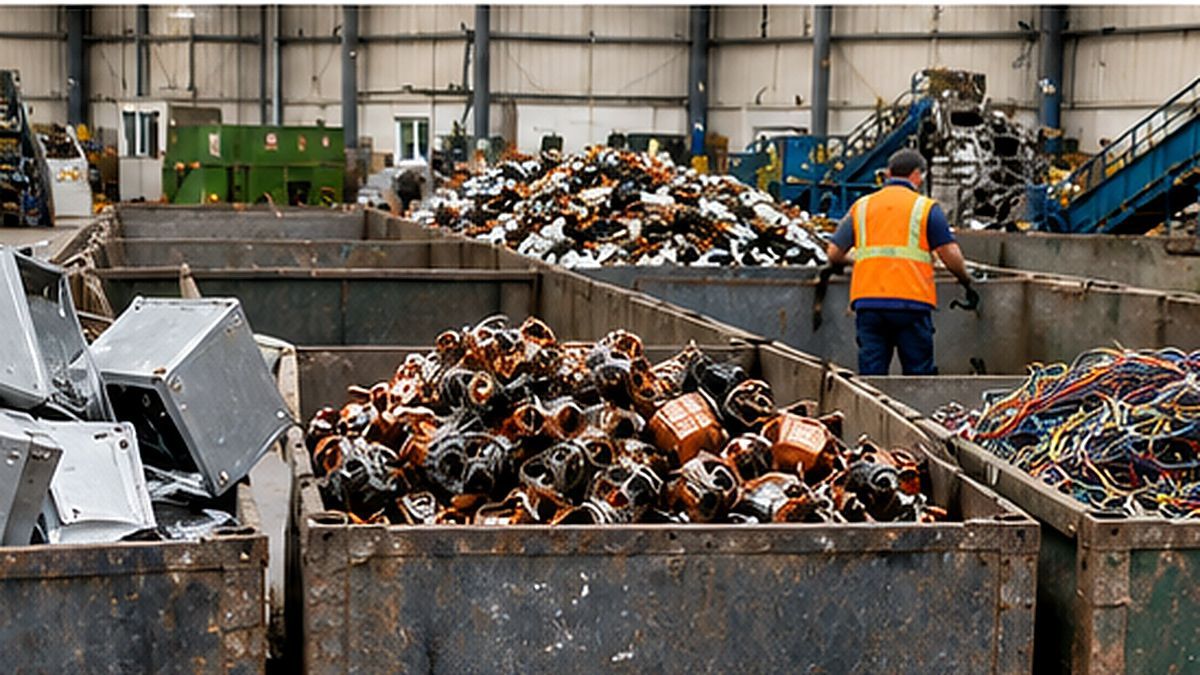
The appliances go to a licensed waste transfer station or treatment facility, where metals, plastics, glass, cables and motors are separated for recycling, and sound working items may be passed on for reuse where possible. Whoever you use, check their licence on the public register held by the Environment Agency, SEPA, Natural Resources Wales or NIEA, depending on where you live. You have a duty of care for your waste, and if it is fly-tipped you can be held responsible. Our upper tier licence is CBDU526130, and you can see what happens next in our guide to recycling after collection.
Questions people ask
Can I put a microwave or toaster in a skip?
Small appliances are electrical waste too, so ask the skip firm before they go in. Most tips have a container for small electricals, and they should never go in a household bin.
What happens if I hide an appliance in the skip?
The skip firm may find it when the load is sorted and charge you for taking it out. It is simpler to ask first and keep the appliances to one side.
Can I leave old appliances next to the skip?
If an appliance is left on the street or beside the skip without anyone agreeing to take it, it can be treated as fly-tipping. Keep appliances on your own property until they are collected.
Can you collect appliances on the day the skip arrives?
We aim for same-day or next-day collection wherever possible. Send a photo early in the morning for the best chance of a slot that day, and have everything disconnected first.
Ready to clear the appliances?
Fill in the form and we reply with a fixed price for collecting every appliance in one visit. Then send us a photo so the price is right first time.
- Licensed waste carrier
- Fixed price from a photo
- Two-person crew and van
- Same or next day where possible

Get a fixed price from a photo
Fill this in and we reply by email with a fixed price. Then send us a photo of the appliance so the price is right first time.
Sent.
No email app on this device? Send the photo to hello@appliance-removal.co.uk with your postcode.