
- Home
- Hob and extractor hood removal
Hob and extractor hood removal
Send a photo of the old hob and hood, get one fixed price, and two people carry them out and take them away for recycling.
- Gas, ceramic and induction hobs
- Chimney and canopy hoods
- Already unfitted, ready to go
- One price for every piece

Get a fixed price from a photo
Fill this in and we reply by email with a fixed price. Then send us a photo of the appliance so the price is right first time.
Sent.
No email app on this device? Send the photo to hello@appliance-removal.co.uk with your postcode.
Hob and extractor hood removal is a small job with awkward parts. A ceramic or induction hob is a thin sheet of glass on a shallow metal tray that can crack if it is knocked on a corner, and a chimney hood comes in two or three pieces: the canopy with the fan motor and filters, plus one or two chimney sections. Send a photo of everything that is going, and we reply by email with one fixed price for carrying it out, loading it and disposing of it. You pay that once it is all on the van.
We collect gas hobs with their pan supports and burner caps, ceramic and induction hobs, domino hobs, chimney and canopy extractor hoods, and integrated hoods that sat inside a wall cupboard. Everything must already be disconnected and unfitted, with the hob out of the worktop and the hood off the wall or chimney breast. A gas hob needs a Gas Safe registered engineer to disconnect it and cap the supply, which the law requires, and a hard-wired hob or hood needs an electrician.
Most of these come out during a kitchen refit, when the old hob, hood and oven all go at once. Put them in one photo with the old oven or dishwasher and one price covers the lot, or see white goods collection for a whole kitchen's worth. Same-day or next-day collection is offered wherever possible, and an early-morning message gives you the best chance of the hob and hood going that day.
Appliance Removal is registered with the Environment Agency as an upper tier waste carrier, licence CBDU526130. Hobs and hoods go to a licensed waste transfer station or treatment facility, where the glass, steel, fan motors and wiring are separated for recycling. If you are pricing up the whole refit, our guide on what affects the cost of appliance removal explains what goes into a quote.
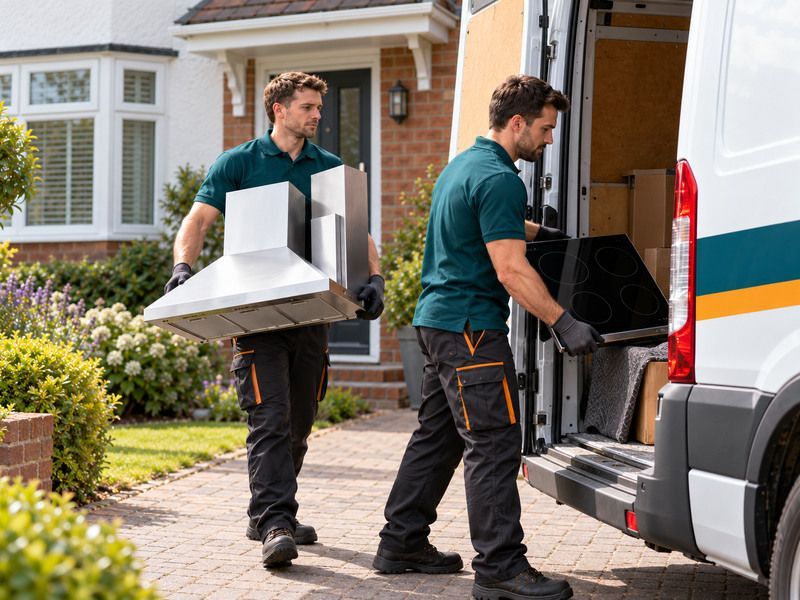
One price for every piece
Send a picture of the hob, the hood and the loose parts, get one price for all of it, and pay once it is loaded. If anything differs from the photo, we tell you first.
What is included
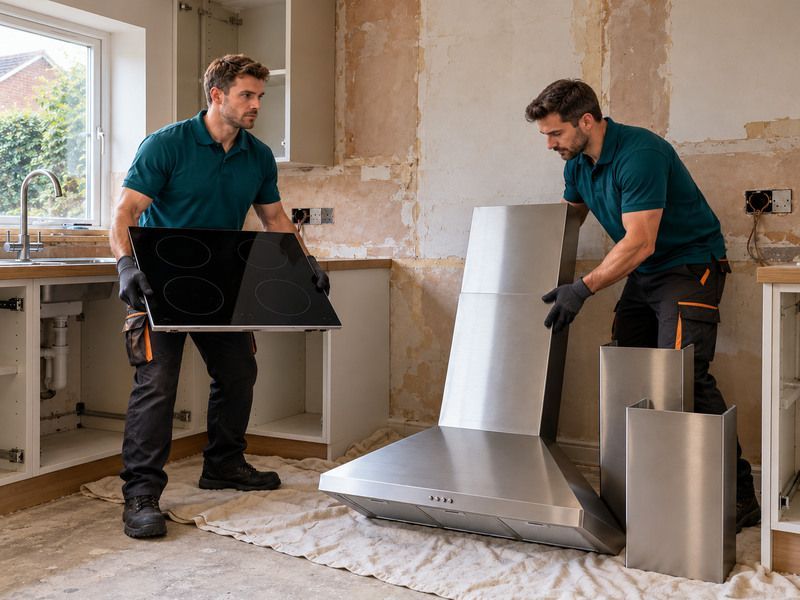
Hobs and hoods we collect
- Gas hobs with pan supports
- Ceramic glass hobs
- Induction hobs
- Domino and two-zone hobs
- Chimney extractor hoods
- Canopy and visor hoods
- Integrated hoods from a cupboard
- Chimney sections and filters
What the price covers
- Two people carry it all out
- Glass tops carried flat
- Chimney sections kept together
- Taken from the garage or kitchen
- Any floor, lift or no lift
- Several pieces on one price
- Taken for licensed recycling
- Pay once it is on the van
How a hob and hood collection works
-
Send a photo
Lay the hob, the hood and any chimney pieces out together, take one picture and send it with the form on this page. Say where they are and on which floor.
-
Get a fixed price
We reply by email with a single price for every piece in the photo, including loose chimney sections, grease filters and pan supports.
-
Make sure it is unfitted
Before the day, the hob should be out of the worktop and the hood off the wall, with gas capped by a Gas Safe engineer and any wiring made safe by an electrician.
-
Pay once it is on the van
Two people carry the pieces out and load them, with glass hobs laid flat. You pay the quoted price then, with nothing added.
Why people use us
A licence you can check
The hob and hood leave with an upper tier waste carrier, licence CBDU526130, registered with the Environment Agency. A waste transfer note is yours on request.
Insured in your home
Public liability insurance up to £5 million and employers' liability of £10 million cover the crew while they carry glass hob tops and steel chimneys through your house.
Small items, same care
A single hob gets the same two-person crew as a full kitchen. The crew brings 15+ years and 500+ jobs to a glass hob as much as to a range cooker.
Glass and steel recycled
Hob glass, hood steel and fan motors are separated at a licensed facility, and 90% of the waste we collect is recycled. A sound working unit may go on for reuse where possible.
How a hob and extractor hood come out of the house
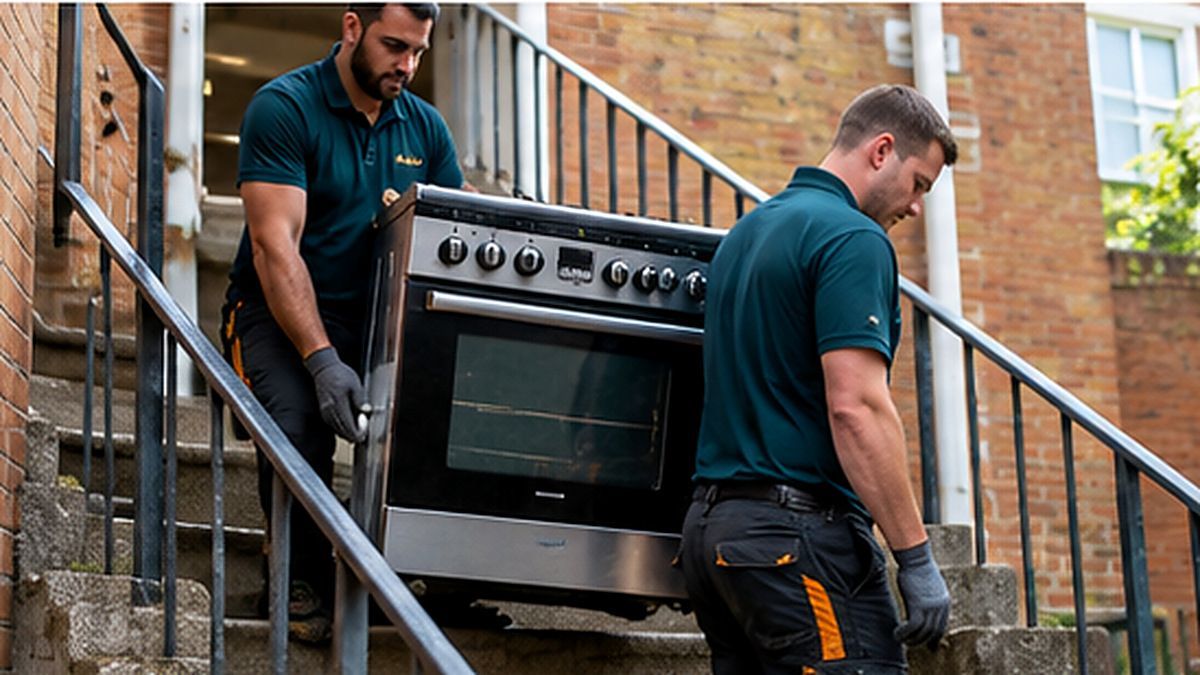
A glass hob is light but fragile at the edges, so it is carried flat, glass side up, and never stood on its corner or stacked under anything heavy. A gas hob is sturdier, and its cast iron pan supports and burner caps go in a box or bag beside it so nothing goes missing between the kitchen and the van. A chimney hood is carried as separate pieces: the canopy with the motor and grease filters, and the chimney sections slid apart or nested one inside the other. Nothing here is heavy on its own, but there are several loose parts and sharp metal edges, and two people can take the lot in one careful trip.
The hob and hood must already be disconnected and unfitted before the crew arrives. A gas hob has to be disconnected and the supply capped by a Gas Safe registered engineer, which is the law for gas work. A hard-wired induction or ceramic hob, or a hood wired into a fused spur, needs a qualified electrician to disconnect it. The hob should be lifted out of its worktop cut-out and the hood taken down from the wall, chimney breast or wall cupboard, because the crew will not cut sealant, unscrew brackets or remove fitted units. If the hob or hood is still in place, book your electrician or Gas Safe engineer first and we collect once both are free. Keep the chimney sections, filters and pan supports in one place so they all go together.
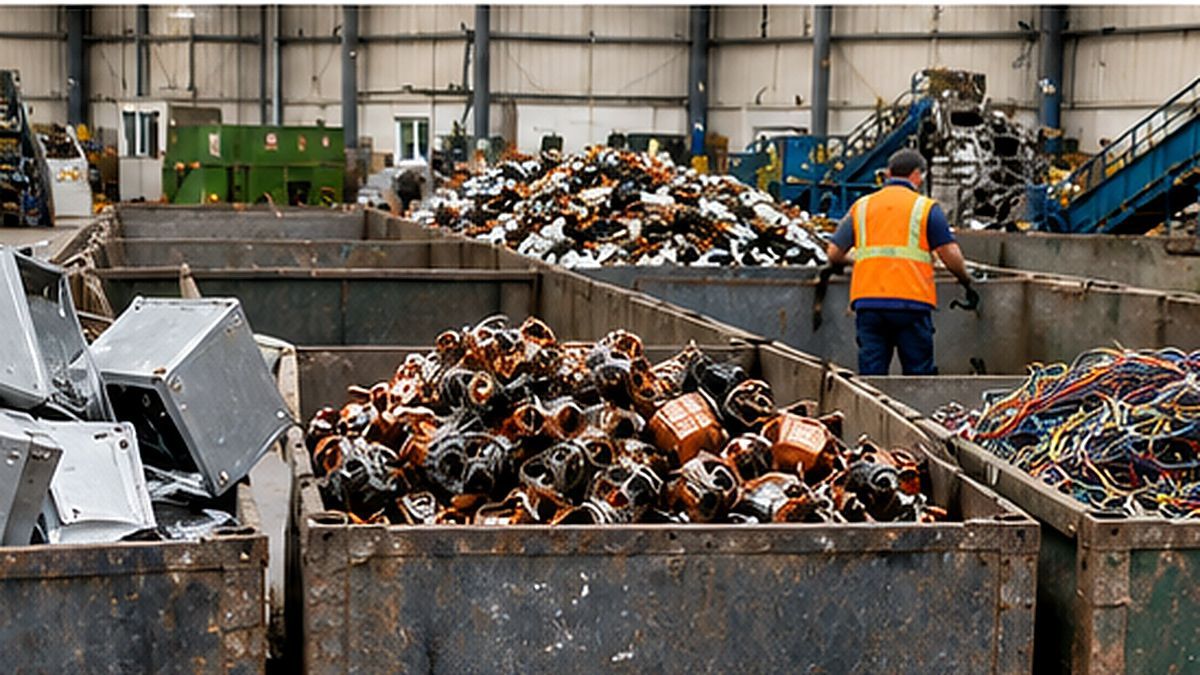
After collection, hobs and hoods go to a licensed waste transfer station or treatment facility as waste electrical equipment. The ceramic or induction glass is separated from the metal tray, the copper coils in an induction hob and the fan motor in a hood are recovered, and the steel chimneys, cast iron pan supports and wiring all go for recycling. A clean, complete unit that still works may be passed on for reuse where possible. We can tell you where it went and provide a waste transfer note on request.
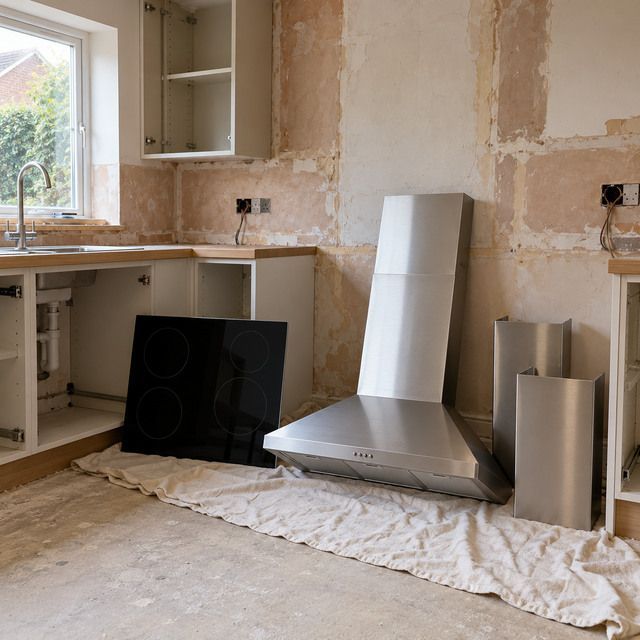
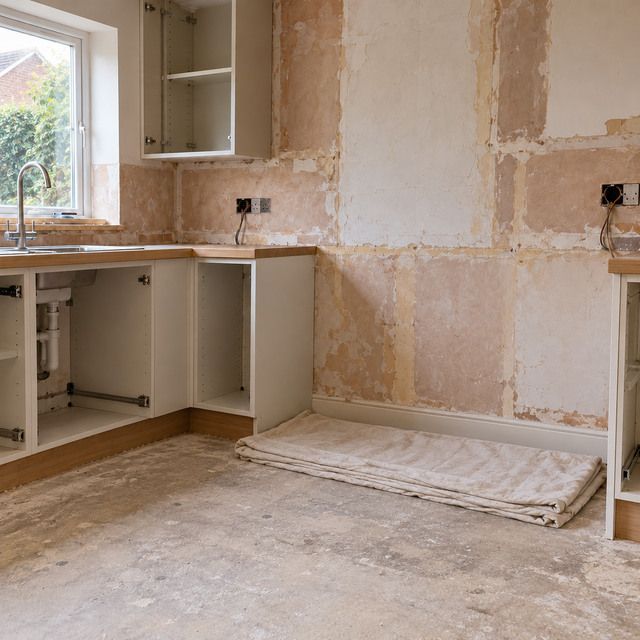
Before and after
Other appliances we collect
-
Cooker and oven
Freestanding, built-in, range
Find out more -
Dishwasher
Full size, slimline, integrated
Find out more -
Several appliances
Kitchen refits and landlords
Find out more -
Any other appliance
Not sure? Send a photo
Find out more -
Washing machine
Front and top loaders
Find out more -
Washer dryer
Combined washer dryers
Find out more
View every appliance we collect
-
Licensed waste carrier Upper tier licence CBDU526130
-
Rated 5 stars on Google By the people we have collected for
-
90% of waste recycled Reuse first, then recycling
-
Insured £5 million public liability
Guides that go with this
Hob and extractor hood removal questions
Can you take the hob out of the worktop for me?
No. The crew lifts and carries but does not cut sealant, undo the fixing clips or disconnect anything. Have your kitchen fitter, electrician or Gas Safe engineer lift it out first, and we collect it once it is free.
Will you take just a hob on its own?
Yes. A single hob is a normal job and still gets two people and a van. Send a photo and we reply with a fixed price for that one item.
The glass on my hob is cracked. Can you still take it?
Yes. A cracked ceramic or induction top is carried flat and kept apart from the other pieces, then recycled like any other. If bits of glass have come loose, put them in a sturdy box so they go too.
The extractor came down in three pieces. Is that a problem?
No. Chimney hoods usually come apart into the canopy and one or two chimney sections. Keep the pieces together with the filters, show them all in the photo, and they go on one price.
Do you collect integrated hoods that sat inside a cupboard?
Yes, once the hood is out of the cupboard. The crew will not take the wall unit apart to get at it, so ask your fitter to remove it during the refit and leave it with the other old appliances.
Can you take the old hob and hood with the oven?
Yes. Kitchen refits often mean the hob, hood and oven all go together, and one photo of them gets one price. The oven needs to be out of its housing too.
Send a photo of the hob and hood and get a price back
Use the form above, or send the picture to hello@appliance-removal.co.uk. We reply with a fixed price and the earliest collection slot we have.