What happens to your appliance after collection
Once the van doors shut, most people never think about their old appliance again. This guide follows it from your kitchen to a licensed facility, explains what is recovered from it and shows how you can check it was handled properly.
Key points
- Old appliances count as waste electrical and electronic equipment, or WEEE, and must be kept out of general waste.
- A registered carrier takes them to a licensed facility, where hazardous parts are removed before anything is shredded.
- Steel, copper, aluminium, plastics and glass are separated and sent on for recycling.
- Appliances that still work well may be passed on for reuse where possible.
- A waste transfer note and a licence number you can check let you show your waste was handled legally.
What happens to your appliance after collection starts with WEEE
Washing machines, cookers, dryers and dishwashers are all classed as waste electrical and electronic equipment, usually shortened to WEEE. That label decides what happens next. WEEE must not go in a household bin or in general waste, and it should be kept separate so it can be recycled.
The reason is what is inside. A large appliance is mostly metal, with a fair amount of plastic, some glass, lengths of cable and at least one motor or heating element. Buried with general waste, all of that is lost. Kept apart, most of it can be recovered and used again.
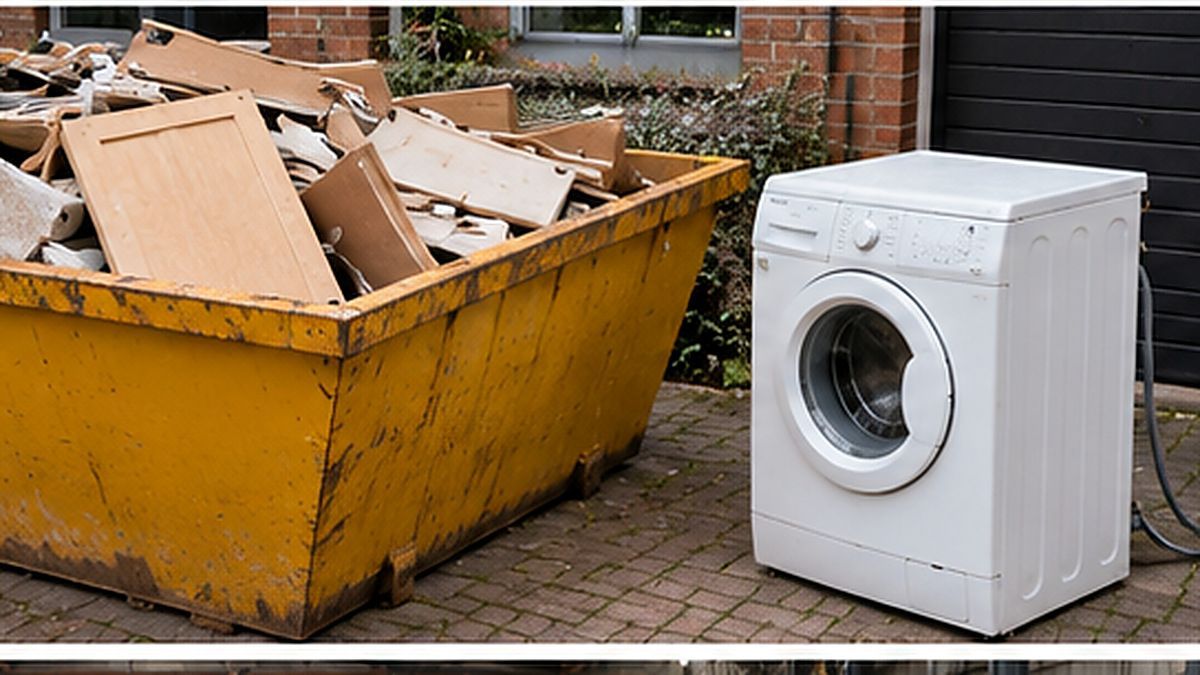
This is also why most skip firms do not want appliances mixed in with other rubbish, or charge extra to take them. If you are planning a clear-out, read can you put appliances in a skip before you start loading.
Leaving your home: the carrier and the paperwork
Before anything else, the appliance has to leave your home with someone allowed to carry it. Anyone you pay to take waste away should be a registered waste carrier. That is part of your duty of care as a householder. If the appliance later turns up dumped in a lane, you can be held responsible, and fly-tipping is a criminal offence.
A waste transfer note records the handover. It says what the waste is, who took it and where it is going. You may never need it, but landlords, businesses and anyone who likes a paper trail should ask for one. We provide a waste transfer note on request and can tell you where your appliance went.
You can also check the carrier yourself. In England, licence numbers are listed on the Environment Agency public register. SEPA keeps the register in Scotland, Natural Resources Wales does so in Wales and the NIEA covers Northern Ireland. A genuine carrier hands over the number without any fuss.
Want it collected and recycled properly?
Send a photo of the appliance and we reply by email with a fixed price for carrying it out and taking it to a licensed facility.
At the licensed facility: hazardous parts come out first
From the van, the appliance goes to a licensed waste transfer station or treatment facility. These sites hold permits to handle WEEE and have to work within the terms of those permits. Appliances are sorted by type when they arrive, because a cooker and a washing machine come apart in different ways.
Before any shredding starts, the parts that need separate handling are taken out. Depending on the appliance, that can mean circuit boards, certain electrical components and anything else classed as hazardous. Removing them first keeps harmful material away from the metal and plastic that will go on to be recycled.
Stripping and shredding: what gets recovered
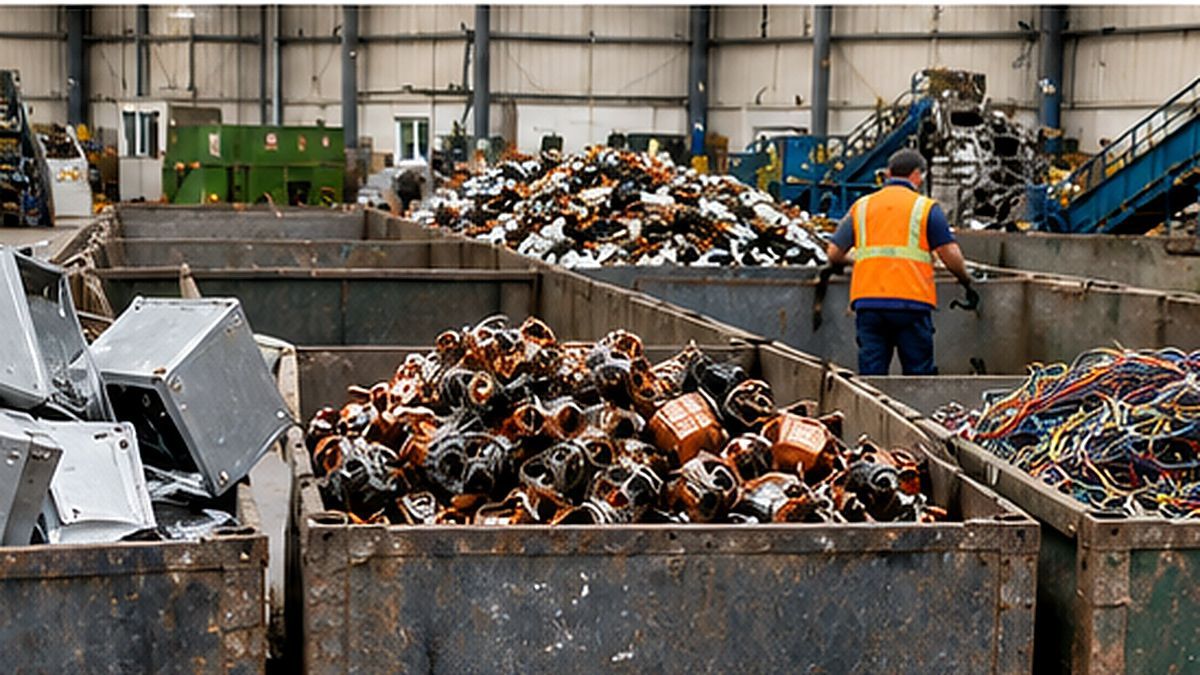
Once the hazardous parts are out, the appliance is stripped and shredded. Steel is pulled from the shredded material first, and it makes up most of the weight of a typical cooker or washing machine. Other metals follow: copper from motors and cables, and aluminium from various fittings and components. All of it goes back into metal production.
Plastics and glass are separated as well, so each can go to its own recycling stream. Glass from oven doors, hob tops and washing machine portholes is taken out at this stage. Washing machines need one extra step, because most carry heavy counterweights made of concrete or a similar material to keep them steady on the spin. Those blocks are separated so they do not spoil the metal.
Across everything we collect, 90% of the waste is recycled. That is the reason the sorting matters so much: each material that is kept clean and separate is a material that can be used again.
Reuse where possible
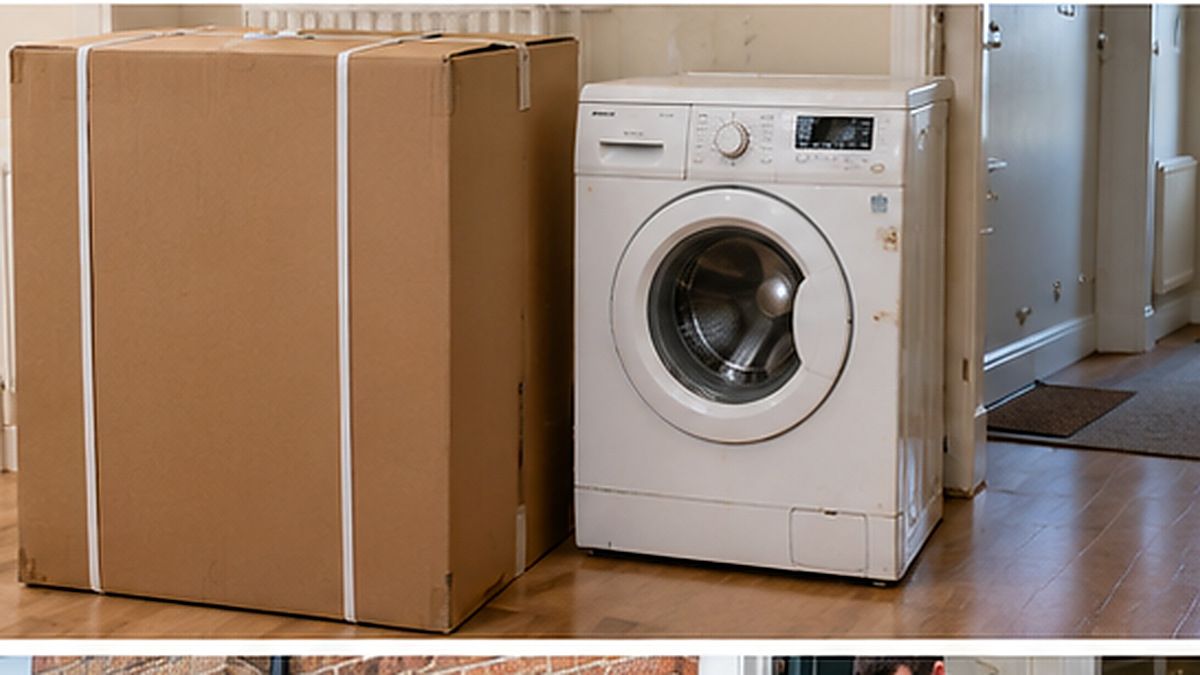
Not every appliance we collect is broken. People replace washing machines during a kitchen refit, landlords swap cookers between lets, and some dryers go because the household has moved to a combined machine. A sound working appliance in good condition may be passed on for reuse or resale through reuse organisations where possible.
Reuse depends on condition, age and safety, so it is never guaranteed. A cooker with a cracked glass top or a dishwasher that leaks will go for recycling instead. If you know your appliance works, mention it when you send the photo, and keep any manuals or shelves with it.
How to make sure it ends up in the right place
The simplest test is to ask questions before you book. Who is collecting it, what is their licence number, and where does it go afterwards? A collector who cannot answer clearly is a risk to you, however cheap the offer. The same applies to scrap collectors, who should also be registered if they take waste away.
If you would rather handle it yourself, the tip and the council bulky waste collection both send large appliances on for proper treatment. The tip usually needs your own vehicle and often a booking, while a bulky collection means a wait and leaving the item outside. Retailer take-back is another route when you are buying a replacement.
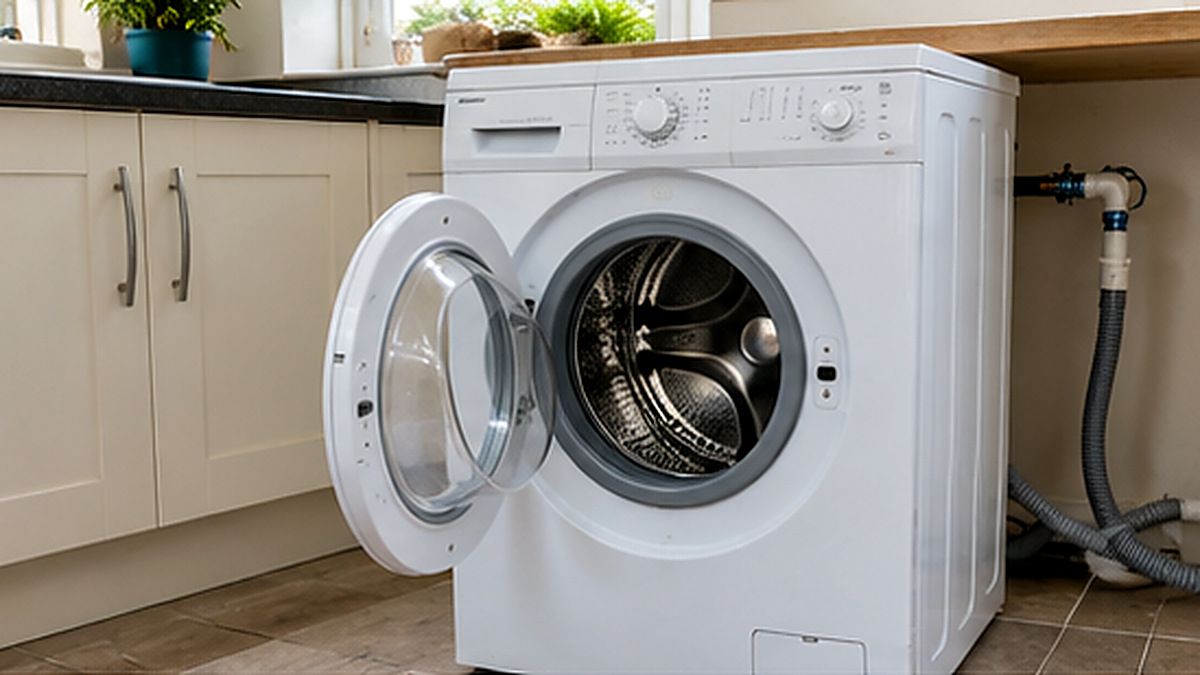
With us, you send a photo, we reply with a fixed price and a two-person crew carries the appliance out once it has been disconnected. Everything goes to a licensed facility under our upper tier waste carrier licence, CBDU526130. Whether it is a single washing machine or a full kitchen of white goods, you can ask where it went.
Questions people ask
Can I get a waste transfer note for my appliance?
Yes. We provide a waste transfer note on request, showing what was collected and where it went. Landlords and businesses often keep one with their records.
Will my working appliance be reused?
It may be, where possible. Sound appliances in good condition can be passed on through reuse organisations, but that depends on age, condition and safety, so we never promise it.
What happens to the concrete block in a washing machine?
Most washing machines carry counterweights made of concrete or something similar. At the treatment facility these are separated from the steel and other metals so the metal can be recycled cleanly.
How do I know a collector is legitimate?
Ask for their waste carrier licence number and check it on the public register kept by the Environment Agency, SEPA, Natural Resources Wales or the NIEA. A legitimate carrier can also tell you where your appliance was taken.
Ready to have it taken away?
Fill in the form and we come back with a fixed price for collecting the appliance and sending it for recycling. Send us a photo afterwards so we can confirm it.
- Licensed waste carrier
- Fixed price from a photo
- Two-person crew and van
- Same or next day where possible

Get a fixed price from a photo
Fill this in and we reply by email with a fixed price. Then send us a photo of the appliance so the price is right first time.
Sent.
No email app on this device? Send the photo to hello@appliance-removal.co.uk with your postcode.