
- Home
- Cooker and oven removal
Cooker and oven removal
Send a photo of the cooker, get one fixed price, and two people carry it out of the kitchen and load it onto the van.
- Freestanding, built-in and range
- Gas capped by your engineer first
- Two people carry it out
- Fixed price from your photo

Get a fixed price from a photo
Fill this in and we reply by email with a fixed price. Then send us a photo of the appliance so the price is right first time.
Sent.
No email app on this device? Send the photo to hello@appliance-removal.co.uk with your postcode.
Cooker and oven removal covers the heaviest things in most kitchens. A freestanding cooker has a steel carcass, glass oven doors and heavy pan supports on top, and a range cooker can be close to twice the width of a standard model. Send a photo of the cooker where it stands, say which floor the kitchen is on, and we reply by email with one fixed price for carrying it out, loading it and disposing of it. You pay that figure once the cooker is on the van.
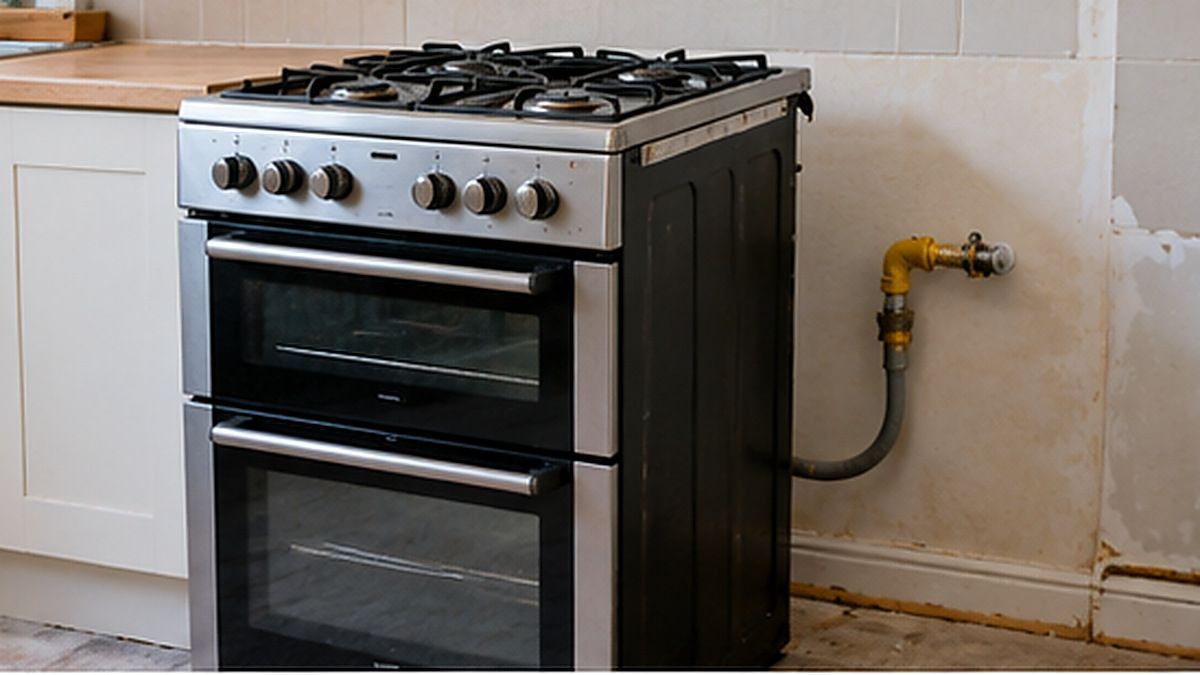
We collect freestanding electric and gas cookers, dual fuel cookers, built-in single and double ovens that are already out of their housing, and range cookers with two or more ovens side by side. A gas cooker must be disconnected and the supply capped by a Gas Safe registered engineer before we arrive, because the law says gas work is for registered engineers only. A hard-wired electric cooker or a built-in oven needs a qualified electrician to disconnect it, while a cooker on an ordinary plug just needs unplugging.
Cookers often go during a kitchen refit, with the old hob and hood coming out the same week. If those are already off the wall and out of the worktop, they can go on the same price through hob and extractor hood removal, and white goods collection puts a whole kitchen of appliances on one visit. Same-day or next-day collection is offered wherever possible. A message early in the morning gives you the best chance of having the cooker gone that day.
We carry cookers under upper tier waste carrier licence CBDU526130, registered with the Environment Agency. Every cooker we take goes to a licensed waste transfer station or treatment facility, where the steel body, oven glass, wiring and heating elements are separated for recycling, and we can tell you where it went. If you are still weighing up the council, the tip and the retailer, our guide on how to dispose of a cooker sets out every route alongside ours.
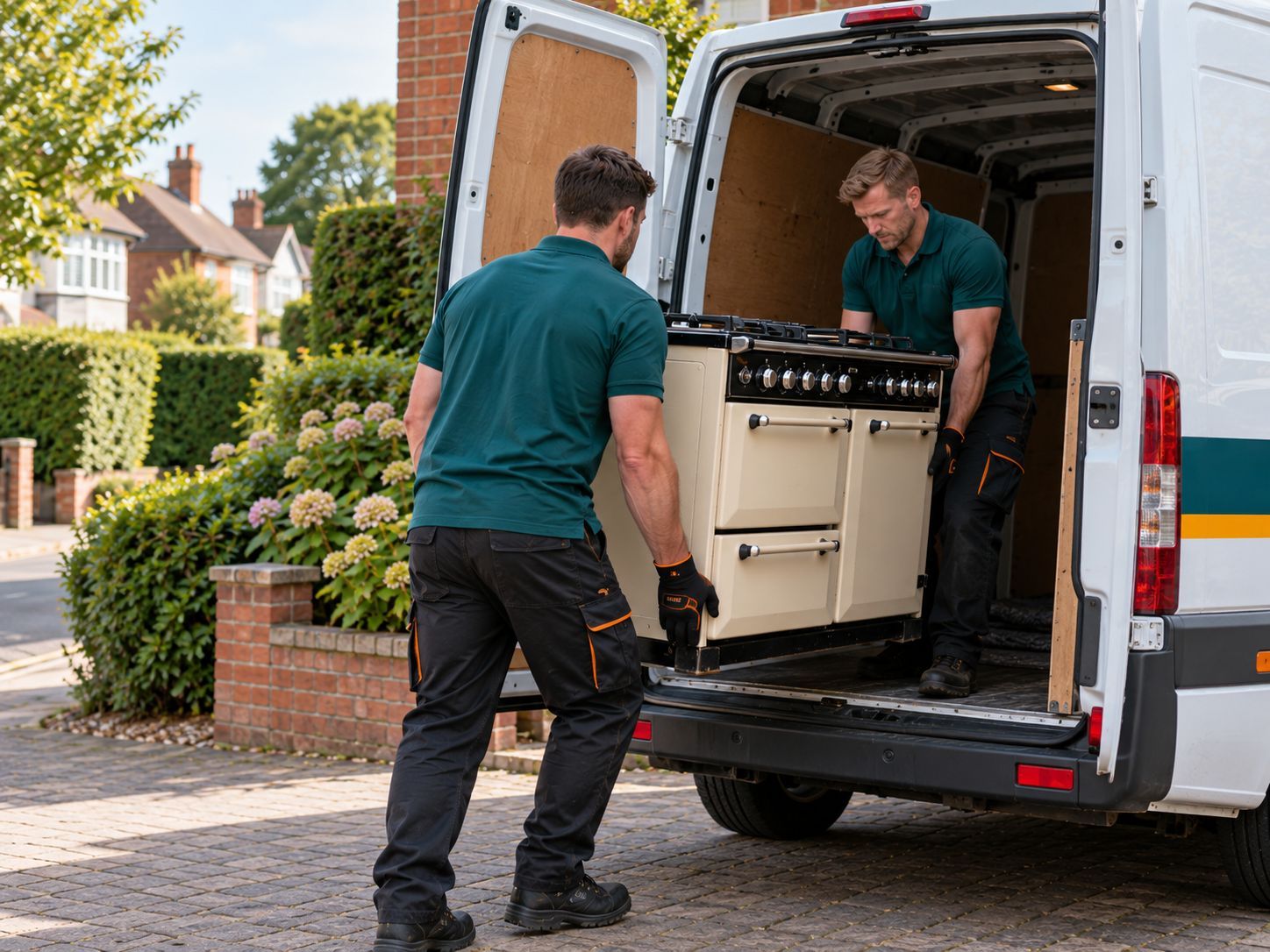
One fixed price from your photo
Send a picture of the cooker, get a price for the whole job, and pay once it is loaded. If it looks different from the photo when we arrive, we tell you before we lift it.
What is included
Cookers and ovens we collect
- Freestanding electric cookers
- Gas cookers, capped beforehand
- Dual fuel cookers
- Range cookers, single or twin oven
- Built-in single and double ovens
- Ovens already out of the housing
- Tabletop and mini ovens
- Old cookers left in a garage
What the price covers on the day
- Two people lift and carry
- Kitchens on any floor
- Flats with or without a lift
- Route checked before the lift
- Shelves, trays and grill pan taken
- Loaded straight onto the van
- Taken for licensed recycling
- You pay once it is loaded
How a cooker collection works
-
Send a photo
Take a picture of the cooker or oven where it is now and send it with the form on this page. Say whether it is gas or electric and which floor it is on.
-
Get one fixed price
We reply by email with a single price for carrying the cooker out, loading it and taking it for recycling. A range cooker is priced from the photo, not guessed.
-
Have it disconnected
Book your Gas Safe registered engineer or electrician before collection day, so the cooker is free and the gas is capped or the wiring made safe.
-
Pay once it is loaded
Two people carry the cooker out of the kitchen and lift it onto the van. You pay the price we quoted then, with nothing added for the weight.
Why people use us
A licence you can look up
Your cooker leaves with an upper tier waste carrier, licence CBDU526130, registered with the Environment Agency. Ask and we give you a waste transfer note for it.
Insured for heavy lifts
A range cooker going down a staircase is covered by public liability insurance up to £5 million, with employers' liability of £10 million for the crew.
Used to the heavy ones
In 15+ years and more than 500 jobs, the crew has carried cookers out of basements, top-floor flats and narrow galley kitchens.
Steel back into use
A cooker is mostly steel, so very little of it is wasted. Across everything we collect, 90% is recycled, and a sound working cooker may go on for reuse where possible.
How a cooker comes out of the kitchen
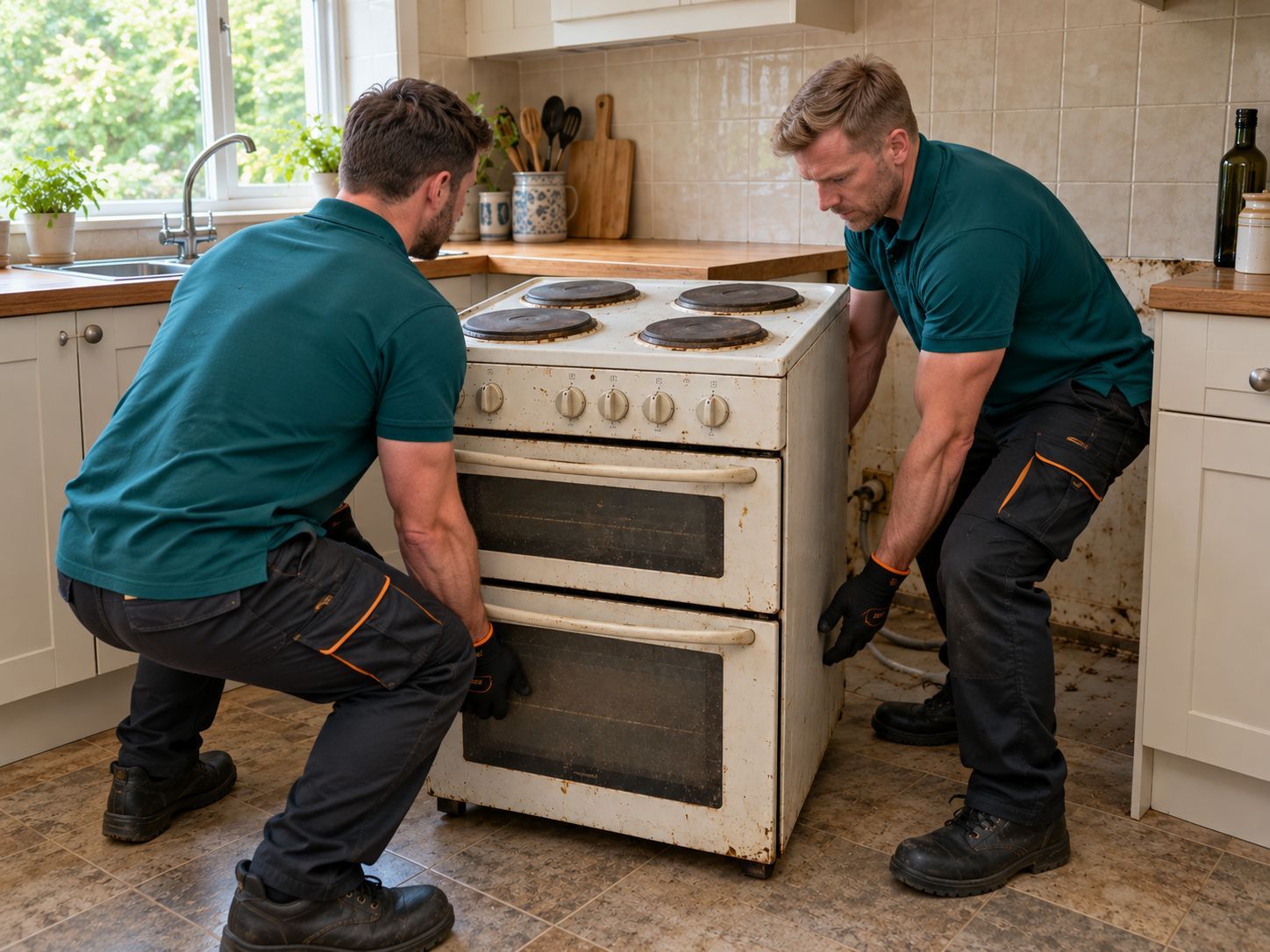
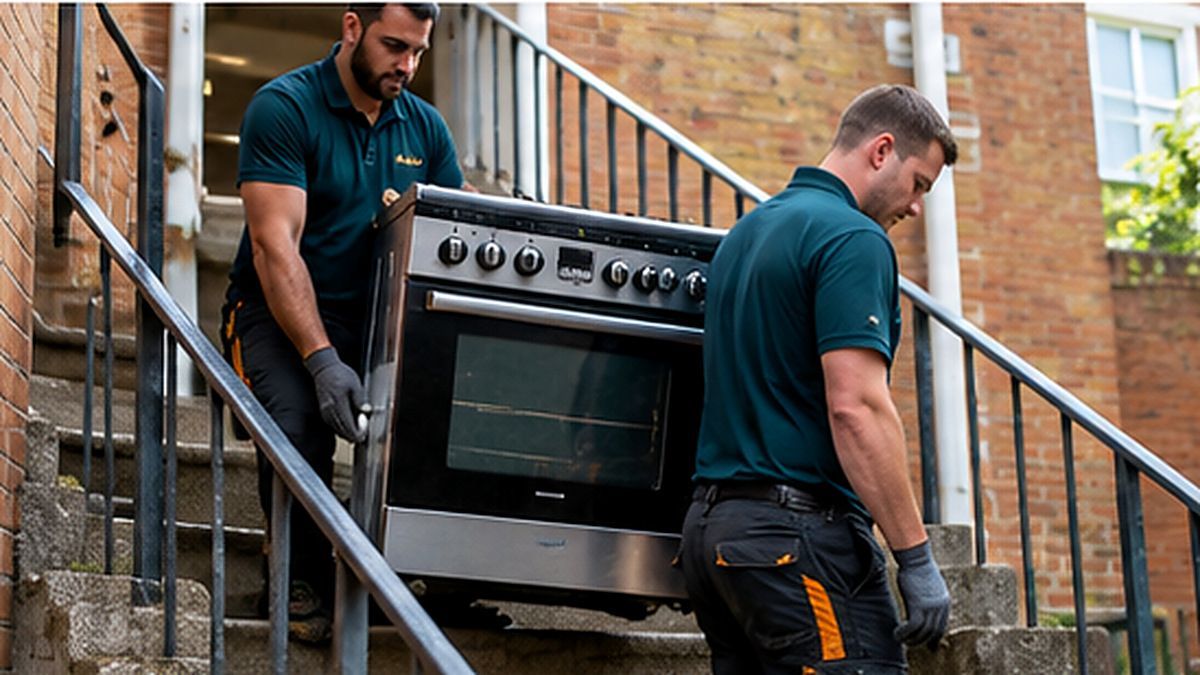
A freestanding cooker is eased forward out of its gap between the units, with the oven door shut and the glass lid down if it has one, then carried upright by two people, one at each side. Most of the weight sits low in the oven cavity, so it stays close to the floor and is only tilted on the stairs. A range cooker is wide and very heavy, and some will not turn through a narrow kitchen door or round a tight landing. Tell us the floor, whether there are stairs or a lift and how narrow the hallway is, and the price allows for the route out. A built-in oven has no feet or handles to grip, so it is carried as a block with a hand under each side.
Everything has to be disconnected before the crew arrives, because they lift and carry but do not disconnect. A gas cooker must be disconnected and the supply capped by a Gas Safe registered engineer; that is the law for any work on gas, and the crew cannot take a cooker that is still on the gas. A hard-wired electric cooker or built-in oven needs a qualified electrician to take it off the cooker circuit, and a built-in oven must already be out of its housing unit, because we do not unscrew or remove fitted units. A plug-in cooker just needs unplugging. If the cooker is still connected, book your Gas Safe engineer or electrician first and we collect it as soon as it is free. Take out any pans or oven gloves, and let the oven cool fully if it was used that morning.
After collection the cooker goes to a licensed waste transfer station or treatment facility as waste electrical equipment. There it is stripped down: the steel body and oven cavity go for metal recycling, the copper in the wiring and elements is recovered, the door glass is taken out, and plastic knobs and trims are sorted separately. A cooker that is clean, complete and working may be passed on for reuse where possible. Ask and we tell you where yours went, and we can provide a waste transfer note.
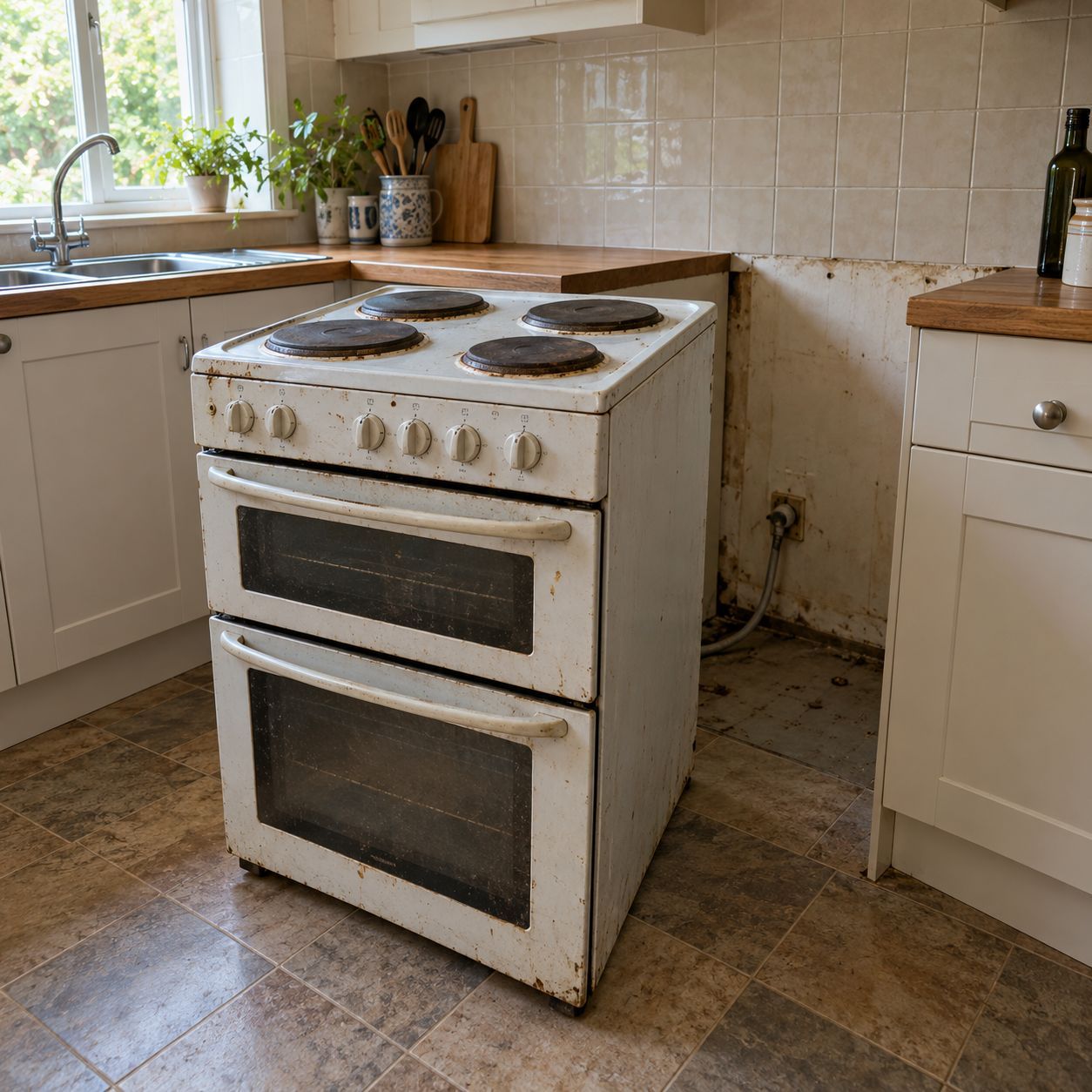
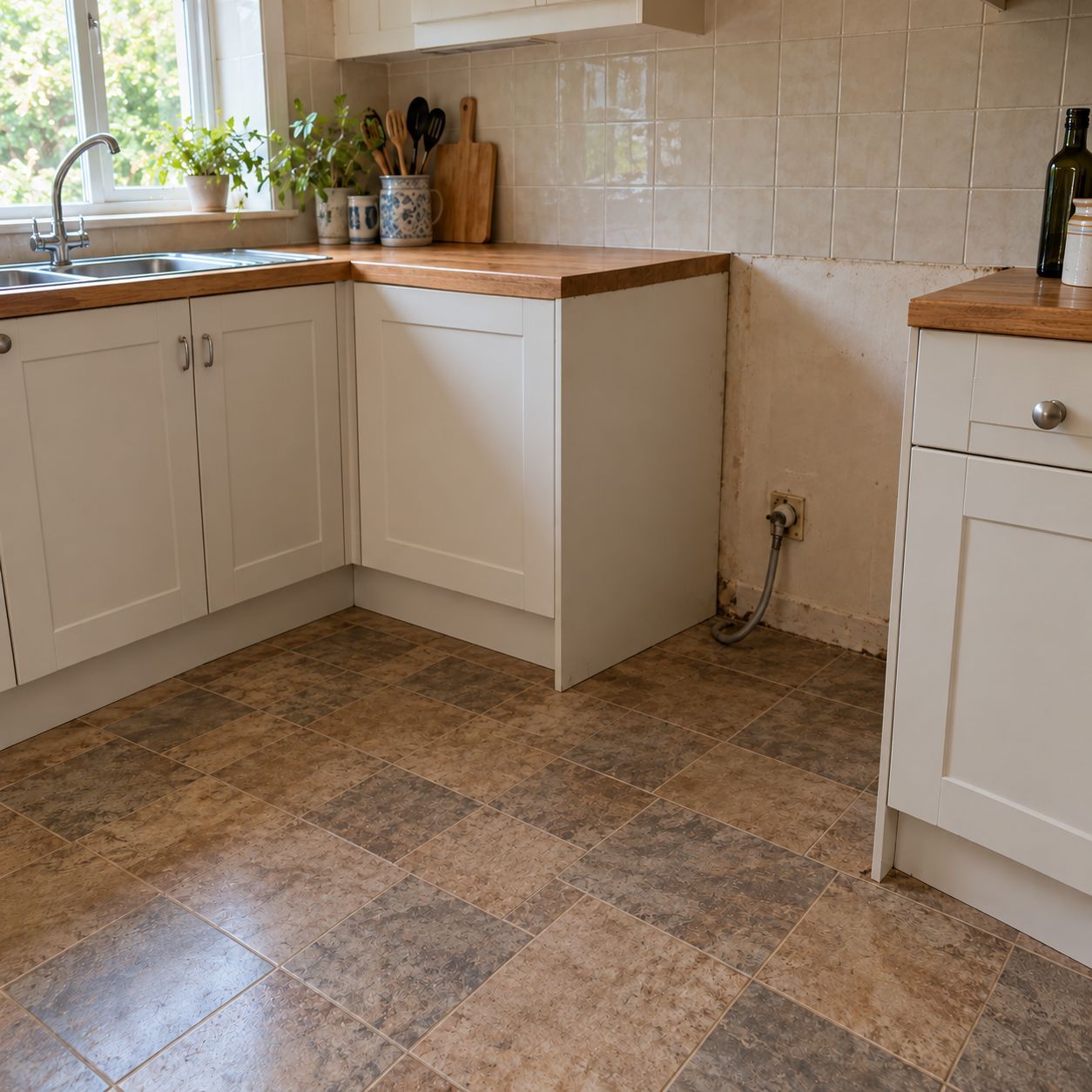
Before and after
Other appliances we collect
-
Hob and extractor
Already unfitted hobs and hoods
Find out more -
Dishwasher
Full size, slimline, integrated
Find out more -
Several appliances
Kitchen refits and landlords
Find out more -
Any other appliance
Not sure? Send a photo
Find out more -
Washing machine
Front and top loaders
Find out more -
Tumble dryer
Vented, condenser, heat pump
Find out more
View every appliance we collect
-
Licensed waste carrier Upper tier licence CBDU526130
-
Rated 5 stars on Google By the people we have collected for
-
90% of waste recycled Reuse first, then recycling
-
Insured £5 million public liability
Guides that go with this
Cooker and oven removal questions
Can you disconnect my gas cooker?
No. A gas cooker must be disconnected and the supply capped by a Gas Safe registered engineer, and that is the law for gas work, not just our policy. Book the engineer before collection day and we carry the cooker out once it is free.
Will you take a range cooker from an upstairs flat?
Yes, as long as we know the route. Range cookers are wide and very heavy, so tell us the floor, whether there is a lift and whether the stairs turn. A photo of the hallway or staircase helps us price it right first time.
My built-in oven is still in the housing. Can the crew take it out?
The crew will not unscrew or remove a fitted oven, because that means undoing the cabinet fixings and the electrics. Have a kitchen fitter or electrician take it out of the housing first, and we collect it from wherever it is left.
Do I need to clean the oven before you collect it?
No. Take out any pans and anything stored in the drawer underneath, and let it cool if it was used recently. Grease and burnt-on food make no difference to the collection or the price.
What happens to an old cooker after you collect it?
It goes to a licensed waste transfer station or treatment facility, where the steel, glass, wiring and other parts are separated for recycling. A clean cooker that still works may be passed on for reuse where possible. We can tell you where it went.
Can you take the old hob and hood with the cooker?
Yes, if they are already disconnected and off the wall or out of the worktop. Put everything in one photo, or send a few pictures together, and we reply with one price for the whole visit.
Send a photo of the cooker and get a price back
Use the form above, or send the picture to hello@appliance-removal.co.uk. We reply with a fixed price and the earliest slot we have.