What affects the cost of appliance removal
No two appliance removals are quite the same, which is why an honest quote depends on the details. This guide explains each thing that changes the price, and why a photo is enough for us to give you one fixed figure.
Key points
- The number and type of appliances matter, but several collected in one visit go on one price.
- Weight and size change how hard the carry is, and range cookers are the heaviest common case.
- Stairs, lifts, narrow routes and parking all affect how long it takes to get the appliance out.
- An appliance that is fully disconnected and ready keeps the job quick, because the crew does not disconnect anything.
- A photo plus a line about the floor and access lets us send a fixed price with nothing added on the day.
What affects the cost of appliance removal
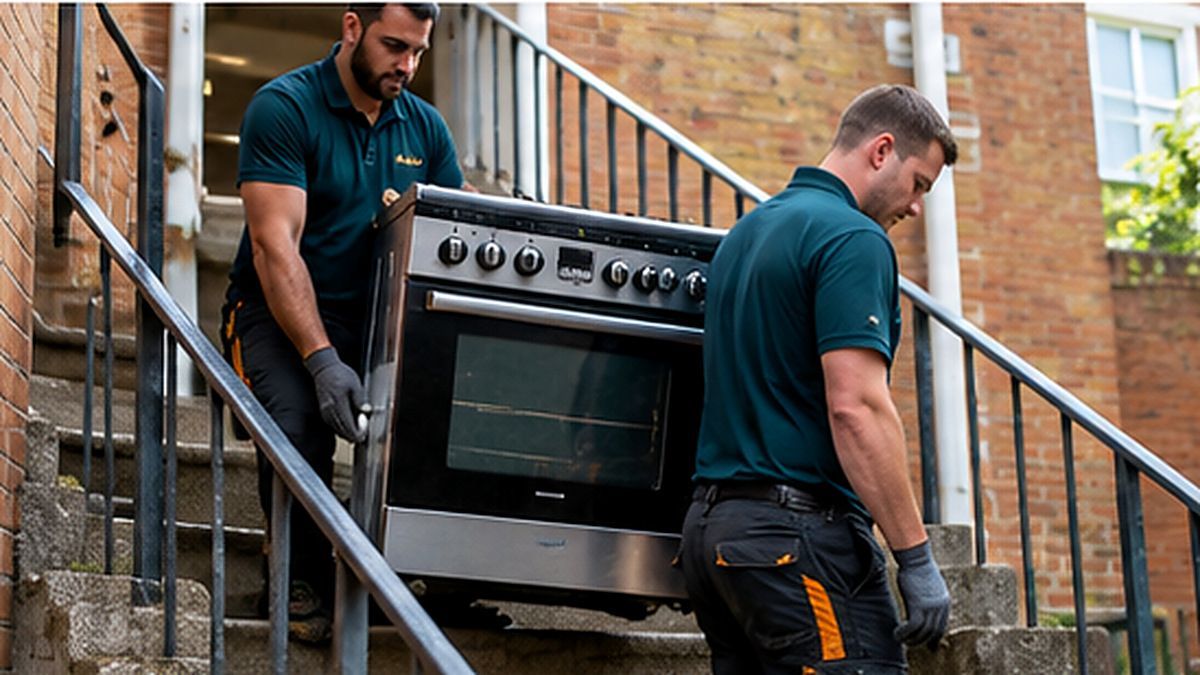
The cost of appliance removal comes down to three things: how much there is to carry, how hard it is to get out, and what it takes to dispose of it properly. Everything else is detail on top of those. A slimline dishwasher by a back door and a range cooker on a second floor are both one appliance, but they are very different jobs.
This guide takes each factor in turn. It does not give prices, because a figure quoted without the details tends to be wrong in one direction or the other. What it does is show you what we look at, so you know what to mention when you ask for a quote.
If cost is your main concern, compare the free and low-cost routes first. The tip needs your own vehicle and your own lifting, the council bulky waste service has its own charges and a wait, and retailer take-back only helps when you are buying a replacement.
The number and type of appliances
A single appliance is the simplest job. Each extra item adds lifting and space in the van, but not a whole new visit, so the cost does not simply multiply. Several appliances collected together go on one price, which is why a kitchen refit or a rental clearance often suits a single white goods collection better than separate bookings.
The type matters too. A microwave or a small countertop oven is light and quick. A hob or extractor hood is not heavy but can be awkward, with a glass top to protect or chimney sections to keep together. A washing machine, a washer dryer or a full-size cooker is a proper two-person lift.
Want a fixed price for your appliance?
Send a photo and a line about the floor and access. We reply with one figure for carrying, loading and disposal, and nothing is added later.
Weight and size
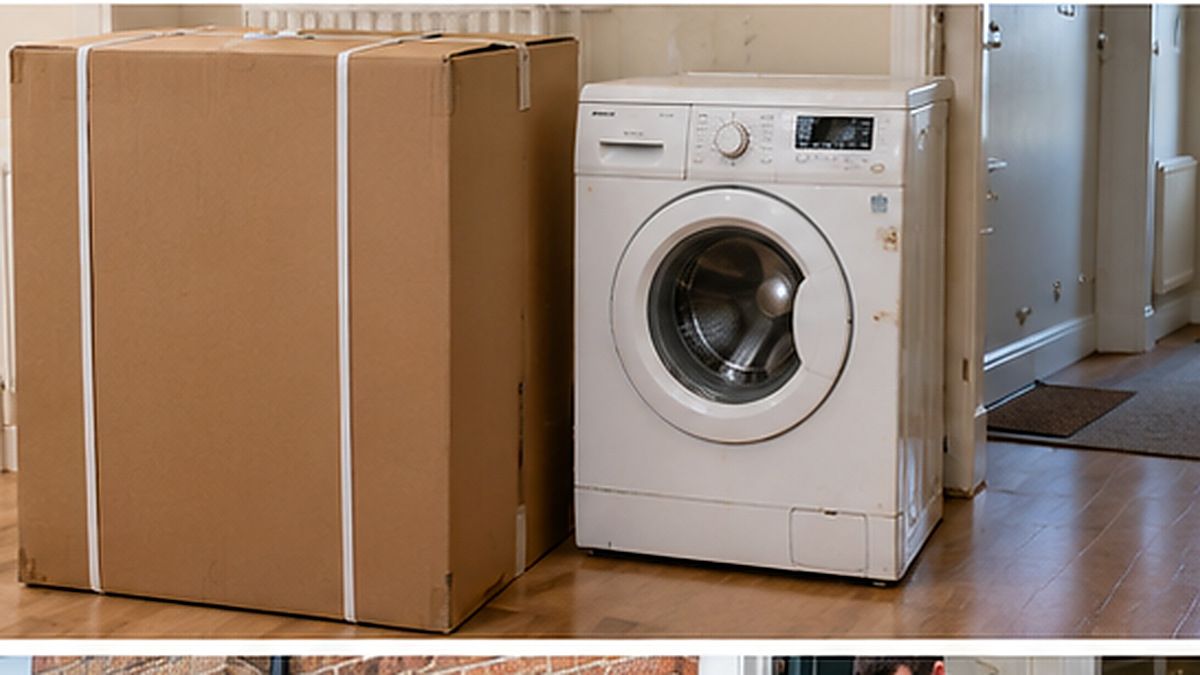
Weight is where appliances catch people out. A washing machine looks compact, but most carry concrete counterweights to keep the drum steady, which makes them far heavier than their size suggests. Water left in the drum or the sump adds more. A washer dryer is heavier again, because it packs two jobs into one cabinet.
Range cookers are the biggest step up. They are wide, very heavy and often finished in enamel or stainless steel that marks easily. Getting one through a kitchen doorway, round a hallway corner and down a front step takes planning. If yours is a range, say so and give the width if you know it, so the price allows for the carry.
Floor, access and parking
Where the appliance sits in the building matters as much as what it is. A ground floor kitchen with a short path to the road is quick. A third-floor flat with no lift means two people taking a heavy appliance down every flight, pausing at each landing. A lift helps, but only if the appliance fits inside it.
Tight corners, narrow hallways, steep garden steps and a long walk from the van all add time. So does parking. If the nearest space is a pay and display bay down the road, or there are permit restrictions outside, tell us when you ask for a price. We would rather know now than find out when the van pulls up.
Whether it is disconnected and ready
Our crew lifts, carries and loads. It does not disconnect anything, and it will not cut, unscrew or remove fitted units. That keeps the job simple and safe, but the appliance needs to be free before we arrive. If yours is still plumbed or wired in, get a plumber, electrician or Gas Safe engineer booked first, and we will collect once it is free.
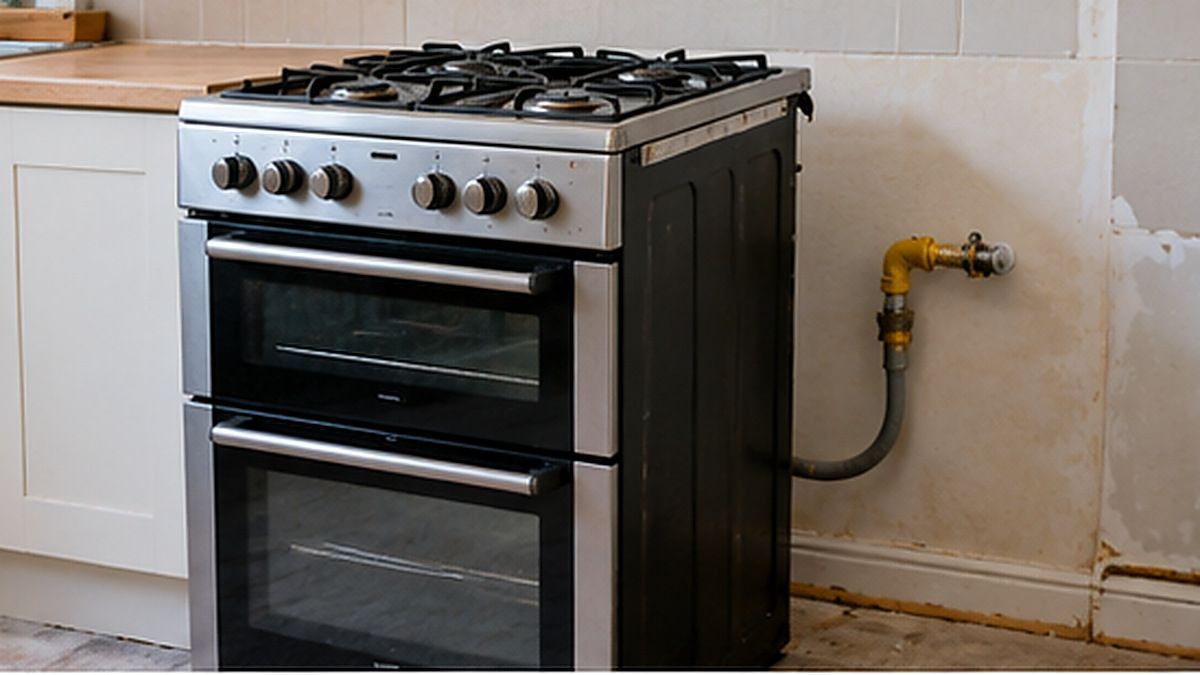
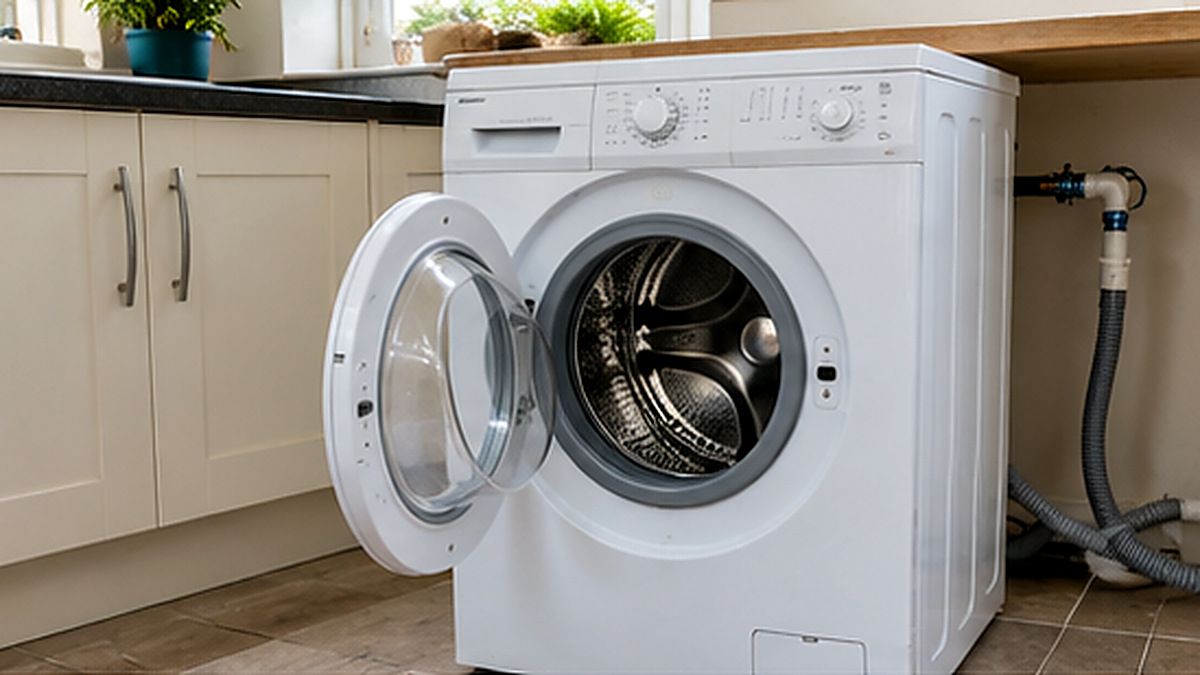
For a washing machine or dishwasher, that means unplugged, water off at the valves and the hoses and waste pipe disconnected. Let it drain and leave a towel down for drips. A vented dryer needs its hose off the wall, and a condenser or heat pump dryer needs its water container emptied. A gas cooker must be disconnected and capped by a Gas Safe registered engineer, because that is the law for gas work. Hard-wired electric cookers and built-in ovens need a qualified electrician, and a built-in oven must already be out of its housing.
An appliance that is ready keeps the visit short and the price exactly as quoted. One that is still connected cannot be taken, and the slot is lost. It is worth checking the day before, especially if a kitchen fitter has been in.
How soon you need it gone
We offer same-day or next-day collection wherever possible. Whether a same-day slot is free depends on where the crews already are, so a message early in the morning gives you the best chance. Later in the day, next-day is usually more realistic.
Urgency can be part of the price, because fitting a job in at short notice means reworking the route for the day. Tell us when you need the appliance gone and the quote takes that into account. We confirm what we can do before you commit to anything.
Disposal costs, and why a photo gives a fixed price
Every appliance we collect goes to a licensed waste transfer station or treatment facility, and proper disposal has a cost of its own alongside the fuel, the van and two people's time. A collector who skips that step can look cheaper, but if your appliance is then fly-tipped, you can be held responsible. Our upper tier waste carrier licence is CBDU526130, and it is listed on the Environment Agency public register.
A photo shows us most of the above in one go: the type of appliance, its size, whether it is still connected and what the room around it looks like. Add a line about the floor, any lift and the parking, and we have what we need. We reply by email with one fixed price that covers carrying, loading and disposal.
Because the price is set from what we have seen, nothing is added on the day. The crew carries the appliance out and loads it, and you pay the quoted price once it is on the van. To see where it goes next, read what happens to your appliance after collection.
Questions people ask
Why do you need a photo before giving a price?
A description often misses the things that change the job, such as a range cooker that is wider than expected or a lift that is too small. A photo lets us price it once and stick to it.
Is it cheaper to have several appliances collected together?
Usually, yes. Several appliances in one visit go on one price, so you avoid paying for separate trips. Mention everything you want gone when you ask for the quote.
Will the price change on the day?
No. The price is fixed from your photo and the details you give, and nothing is added when the crew arrives. That is why we ask about the floor, the lift and the parking up front.
Do you charge extra to disconnect the appliance?
We do not disconnect appliances at all, so there is nothing to add. Have it unplugged, plumbed out or capped by the right tradesperson before we arrive, and the crew will carry it straight out.
Ready for a price?
Fill in the form with the appliance, the floor and the access, and we reply by email with a fixed price. Send us a photo next so we can confirm it.
- Licensed waste carrier
- Fixed price from a photo
- Two-person crew and van
- Same or next day where possible

Get a fixed price from a photo
Fill this in and we reply by email with a fixed price. Then send us a photo of the appliance so the price is right first time.
Sent.
No email app on this device? Send the photo to hello@appliance-removal.co.uk with your postcode.