How to dispose of a cooker
A cooker is one of the few appliances you often cannot just unplug and move. Gas and hard-wired models need a professional to disconnect them, and range cookers need a plan for the route out. Here is how to deal with each kind, and every way to get rid of it.
Key points
- A gas cooker must be disconnected and the supply capped by a Gas Safe registered engineer before anyone moves it.
- Hard-wired electric cookers and built-in ovens need a qualified electrician; plug-in models are simply unplugged.
- Range cookers are wide and very heavy, so check door widths, steps and stairs before collection day.
- Cookers are electrical waste, so they go to the tip, a council collection or a registered carrier, never the bin.
- A licensed crew carries the cooker out once it is free and gives you a fixed price from a photo.
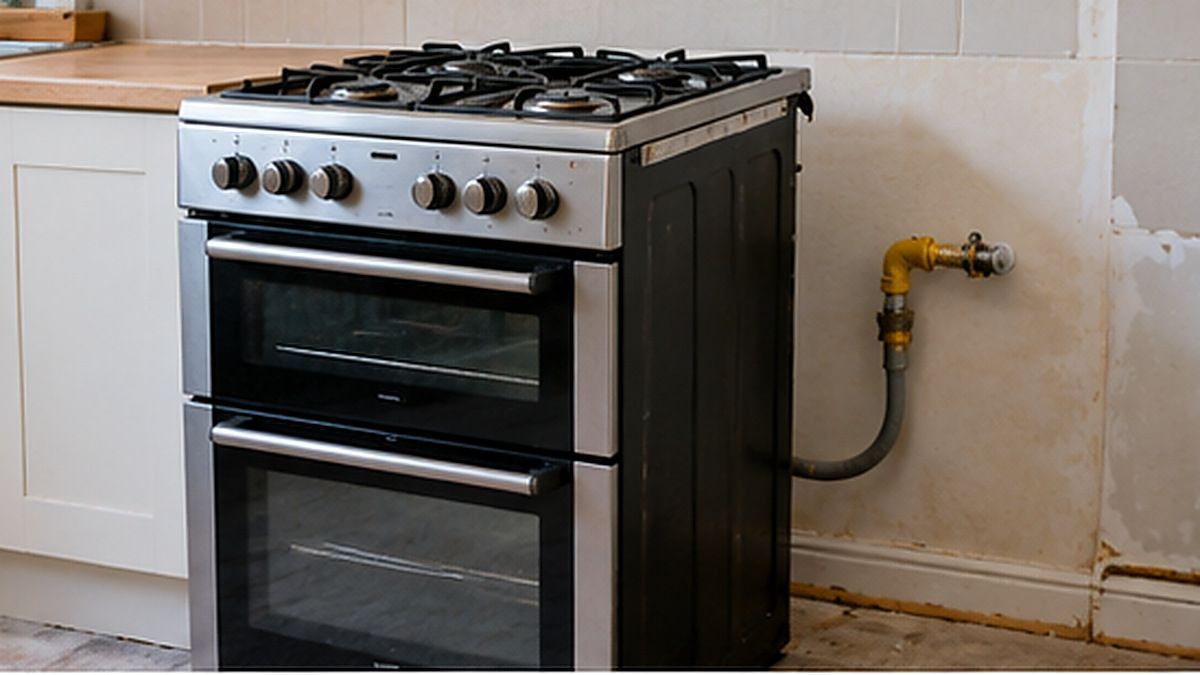
How to dispose of a cooker: check how it is connected
Before you think about where the cooker goes, work out how it is connected. That decides who has to be involved and how soon it can move. Look on the wall nearby for a cooker switch or a socket, and if you can see behind the cooker, check for a gas pipe with a bayonet fitting.
There are three broad types. A plug-in electric cooker runs from an ordinary socket and can be switched off and unplugged. A hard-wired electric cooker connects to a cooker switch through a fixed cable, and a built-in oven is often wired the same way inside its housing unit. A gas cooker, or a dual fuel model with a gas hob, sits on a gas supply.
Range cookers can be any of these, and they bring a second problem: their size. A wide range with two ovens weighs far more than a standard freestanding cooker, and that changes how it can leave the house. The sections below cover the disconnection first, then every way of disposing of it, whether you have a single oven or a full range cooker.
Gas, hard-wired and plug-in: who disconnects it
A gas cooker must be disconnected by a Gas Safe registered engineer, who turns off the supply, removes the hose and caps the pipe so it is safe. This is the law for any work on gas fittings, not a matter of preference, and it applies to dual fuel cookers too. Do not drag a gas cooker away from the wall to see how it comes off, because the hose and the fitting can be damaged.
A hard-wired electric cooker or a built-in oven should be disconnected by a qualified electrician. They isolate the circuit, take the cable off the cooker and make the end safe at the wall. A built-in oven also has to come out of its housing unit, and an electrician or kitchen fitter can usually do both in one visit. If a hob sits above the oven it may need unfitting from the worktop too, which our hob and extractor page covers.
Once it is free, clean out the oven, take out any shelves or trays you want to keep and leave nothing inside. Most collectors, including the council and us, will not disconnect a cooker. If it is still connected, book your electrician or Gas Safe engineer first and arrange the collection for after their visit.
Cooker disconnected and ready to go?
Send a photo of the cooker with a line about the floor and the route out, and we reply with one fixed price. You pay once it is loaded.
Selling it or giving it away
A clean, working cooker can find a new home, especially a newer model or a range in good order. List it with the make, the width, the fuel type and a photo of the inside of the oven, and say whether it has already been disconnected. Buyers will want to know it works, so describe the rings, oven and grill honestly.
Gas cookers can be harder to pass on than electric ones, because the new owner also needs an engineer to fit theirs. Free listings tend to move faster than sales, but the person taking it still has to carry it, so be clear about the weight and any stairs. Have it disconnected before you list it, so whoever comes can take it away there and then.
The council and the tip
Councils generally offer a bulky waste collection that takes cookers. It is booked ahead, there is usually a wait, and the cooker has to be outside on the day, already disconnected. Charges and accepted items vary between councils, and a heavy range may fall outside what yours will take, so check first. The crew collects from the kerb or the drive and will not come indoors.
Most household waste recycling centres accept cookers in their electricals area. Many councils ask you to book, and vans or trailers may need a permit. A small cooker might fit in a large estate car with the seats down, but a range needs a van and at least two strong people, ideally with a sack truck or lifting straps.
Retailer take-back and scrap collectors
When you buy a new cooker, the retailer has to offer a free way to dispose of your old one. That might mean taking it back in store, or it might mean pointing you to a recycling centre the retailer helps to fund. Taking the old cooker away on delivery is usually a separate service, often charged, and the crew may refuse one that is still connected or not ready by the door. Our guide on whether retailers take old appliances away goes through the detail.
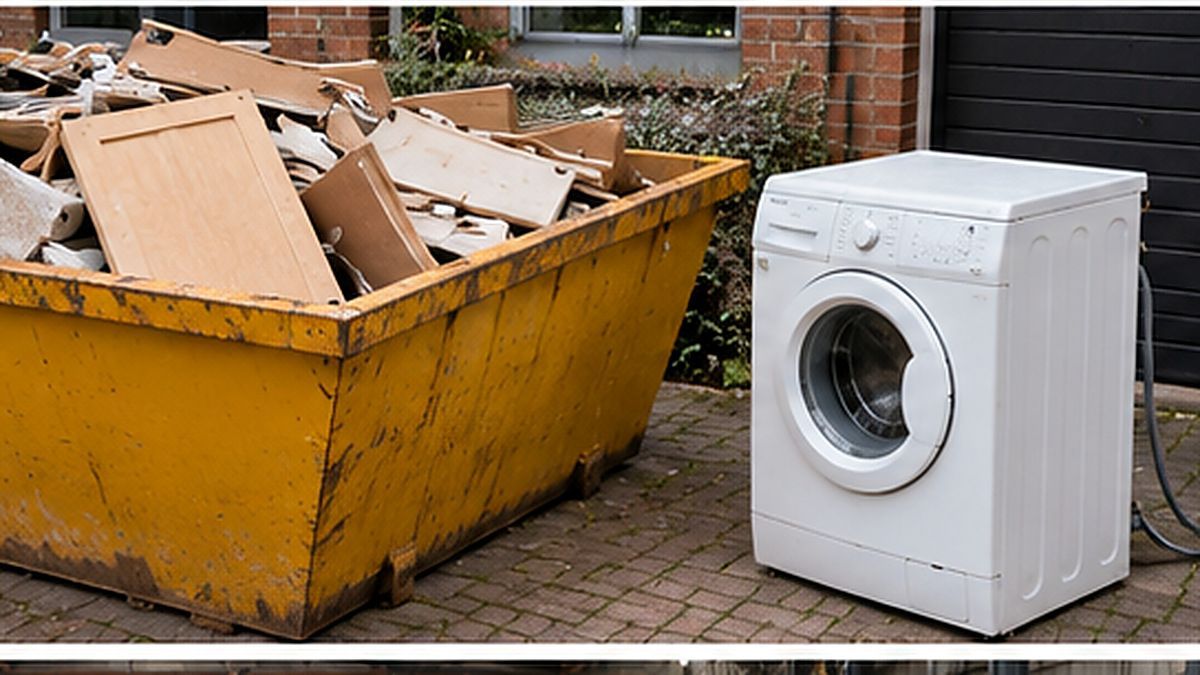
Scrap collectors sometimes take cookers for the steel, particularly heavy ranges. Ask whether they hold a waste carrier registration before you hand anything over, because you stay responsible for where your waste ends up. And if you have hired a skip for the kitchen, ask the firm before the old oven goes in, because most refuse electricals; see can you put appliances in a skip.
Range cookers: plan the route out
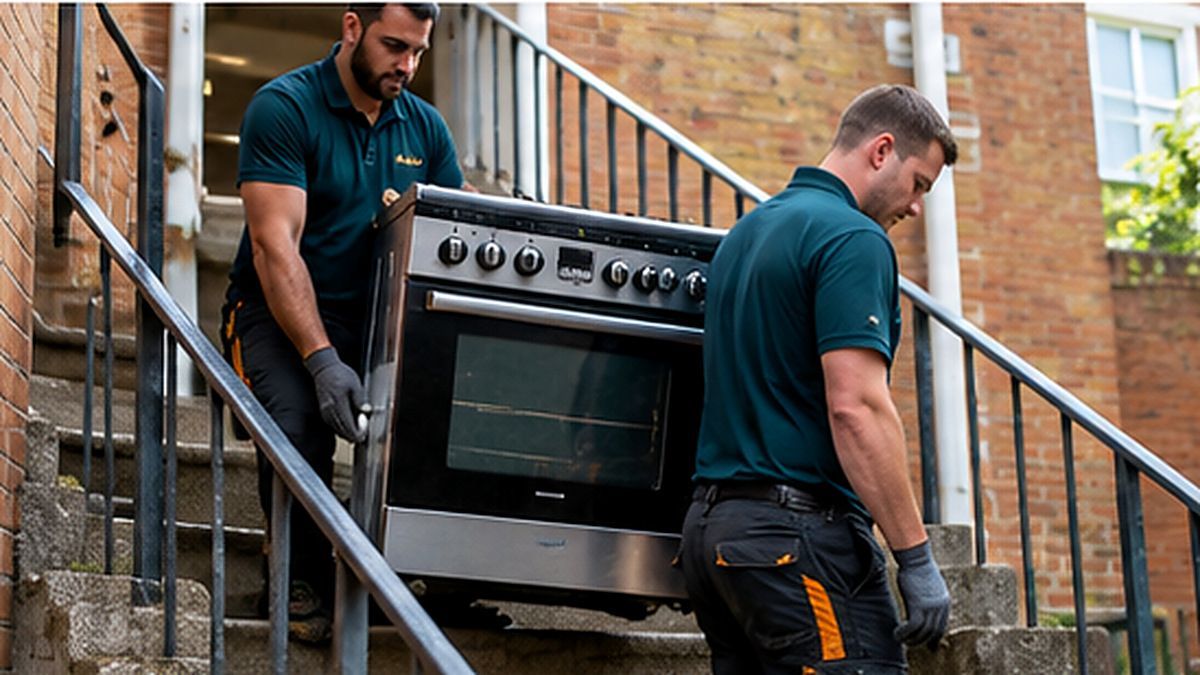
A range cooker is the hardest cooker to move. It is wide, made of heavy steel with cast iron pan supports, and often sits in a recess between units. Measure the doorways and the hall against its width, and note any steps, tight turns or stairs between the kitchen and the street. If the range went in before the units or a door frame were fitted, getting it out may take some thought.
Tell whoever is collecting which floor the range is on, how wide it is, and whether there is a lift or parking close to the door. A crew can plan for a tight route when they know about it in advance, but it is much harder to deal with on the day. Take out the pan supports, shelves and any loose trays so nothing slides around as it is carried.
A licensed collection once it is disconnected
If you would rather not lift it, a licensed collection takes the cooker from where it stands. With us you send a photo, we reply by email with one fixed price, and two people carry the cooker out of the kitchen and load it onto the van. You pay once it is loaded. We collect as soon as it has been disconnected, aiming for same-day or next-day wherever possible.
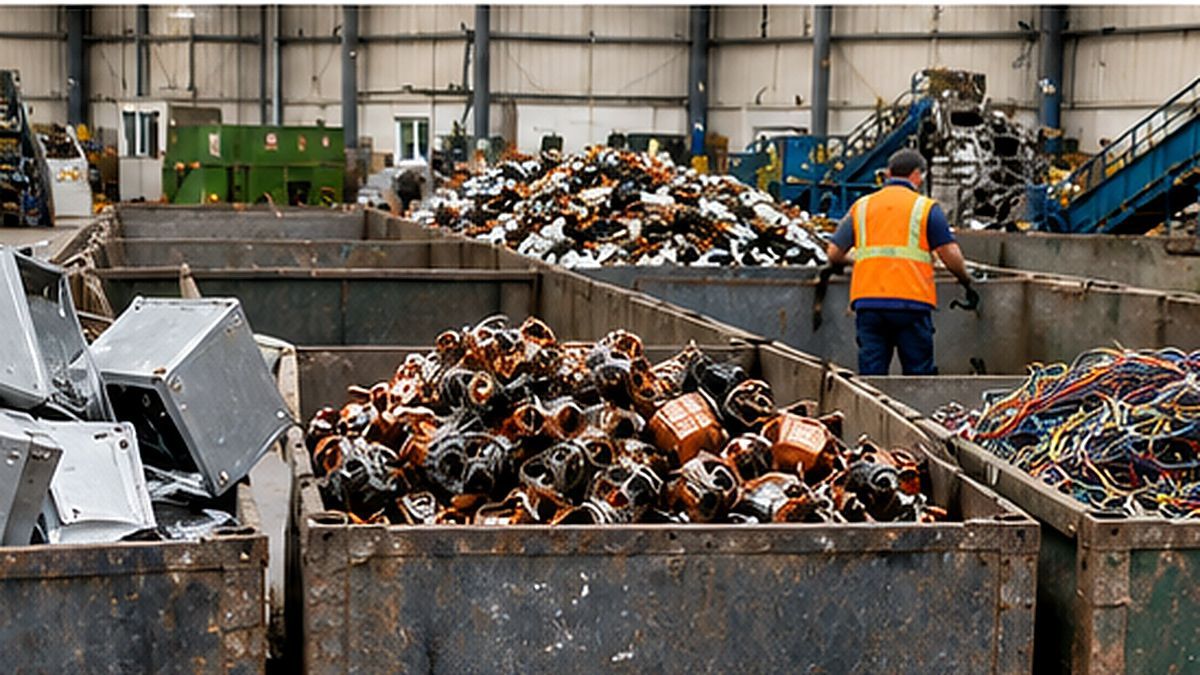
The cooker then goes to a licensed waste transfer station or treatment facility, where the steel, the glass doors, the cables and the elements are separated for recycling. Before you book anyone, check their licence on the public register, because you have a duty of care for your waste and fly-tipping is a criminal offence. Our upper tier licence is CBDU526130, and we can tell you where the cooker went.
Questions people ask
Can I disconnect a gas cooker myself?
No. Work on gas fittings must be done by a Gas Safe registered engineer, who caps the supply so it is safe. Book the engineer before you arrange a collection.
Do I need an electrician for an electric cooker?
Only if it is hard-wired to a cooker switch or it is a built-in oven. A cooker with an ordinary plug can be switched off and unplugged. If you are not sure, look for a plug before you book anyone.
Will your crew take a built-in oven out of the unit?
No. The oven needs to be disconnected and already out of its housing before we arrive, because the crew does not cut, unscrew or remove fitted units. Once it is out, we carry it away.
Can you collect a range cooker from upstairs?
Yes, as long as it is disconnected and we know the route in advance. Send a photo and tell us the floor, the width and whether there is a lift, and the price we send allows for it.
Ready to have the cooker collected?
Fill in the form and we reply with a fixed price for carrying the cooker out once it is disconnected. Then send us a photo so the price is right first time.
- Licensed waste carrier
- Fixed price from a photo
- Two-person crew and van
- Same or next day where possible

Get a fixed price from a photo
Fill this in and we reply by email with a fixed price. Then send us a photo of the appliance so the price is right first time.
Sent.
No email app on this device? Send the photo to hello@appliance-removal.co.uk with your postcode.