How to get rid of a washing machine
An old washing machine is heavy, awkward and cannot go in the bin. Whether it still works or has finally given up, here is every realistic way to move it on, and what each one asks of you.
Key points
- A working washing machine can be sold or given away, but buyers will want to know it runs without leaking.
- Washing machines are electrical waste and must never go in a household bin or out with general rubbish.
- Council bulky waste and the tip both work, but you do the lifting and the machine has to be got outside.
- Retailers must offer a free way to dispose of the old machine when you buy a new one, though home collection is often extra.
- Whoever you pay to take it should be a registered waste carrier, and the plumbing has to be disconnected first.
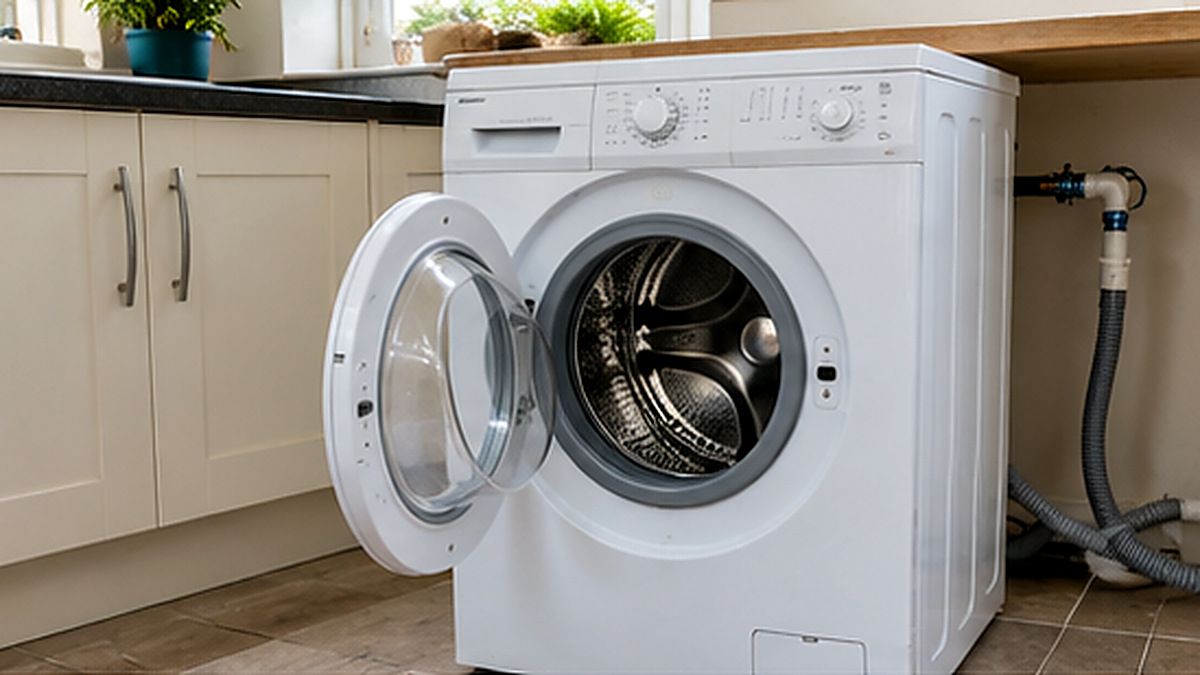
How to get rid of a washing machine: working or not
The first question is whether the machine still does its job. A washing machine that fills, spins and drains without leaking has value to someone, even if it is a few years old. One that trips the electrics, leaks from the door seal or grinds on the spin cycle is waste, and the choice becomes who carries it away and where it ends up.
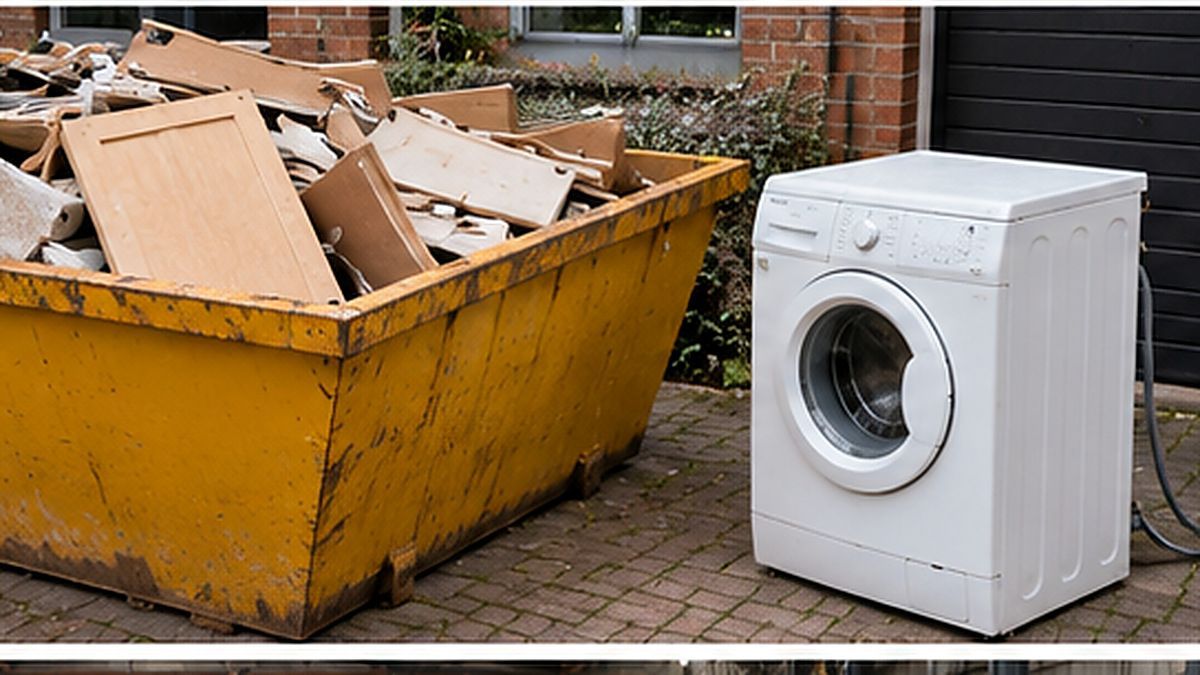
Whichever way it goes, it cannot go in the bin. A washing machine counts as waste electrical and electronic equipment, usually shortened to WEEE, and it has to be kept apart from general waste so the metal, plastic and motor can be recycled. That rules out breaking it up for the wheelie bin or slipping it into a skip without asking the hire firm.
Then think about the weight. Most front loaders carry a concrete counterweight to stop them walking across the floor on spin, which is why they are far harder to shift than they look. Getting one out of a kitchen and over a doorstep, let alone down a flight of stairs, is a job for two people. Our page on washing machine removal explains how a crew handles it.
Get it disconnected and drained first
Every route below starts the same way: the machine has to be free of the plumbing. Switch it off and unplug it, turn off the hot and cold valves behind it, unscrew the inlet hoses and pull the waste pipe out of the standpipe or sink trap. If you are not confident doing that, a plumber can do it in a short visit.
Expect water. There is always some left in the drum, the pump and the sump, so let it drain over a tray or open the filter flap at the bottom with a towel underneath. Leave the door ajar for a day, or wipe the drum and seal dry, so the machine is not shut up wet and smelling by the time it is collected.
You do not need to refit transit bolts for disposal. They only matter when a machine is being moved to be used again, and nobody taking it for recycling will ask for them. The same preparation applies to a washer dryer or a dishwasher.
Rather not lift it yourself?
Send a photo of the washing machine and we reply with one fixed price for carrying it out and recycling it. You pay once it is on the van.
Selling it or giving it away
If the machine works, listing it online is worth a try. Give the brand, the drum size and the spin speed, say roughly how old it is, and be honest about any marks or noises. People buying second-hand washing machines are cautious, so expect questions about leaks and requests to see it run before they collect.
Giving it away on a free listing or a community group usually moves faster. Whoever takes it brings their own transport and help, though you may still need to get it to the front door. Plenty of people arrange a time and never arrive, so keep the machine disconnected and ready rather than plumbing it back in between offers.
The council, the tip and scrap collectors
Councils generally run a bulky waste collection that takes large appliances. You book it ahead, there is normally a wait, and the machine has to be outside on the set day because the crew will not come into the house. Charges and rules vary from one council to the next, so check before you book and work out how two of you will carry it out.
Household waste recycling centres usually accept washing machines in a separate electricals area. Many councils now ask residents to book a slot, and if you arrive in a van or with a trailer you may need a permit. A full size machine rarely fits in a car, so this route mainly suits people who have a van and someone to help lift.
Some people leave an old machine out for scrap metal collectors, who are after the steel drum and the motor. If you go this way, ask whether the collector is a registered waste carrier. Anyone collecting waste should be, and a machine that ends up dumped can still be traced to the address it came from.
Retailer take-back when you buy a new one
If you are replacing the machine, the shop selling the new one has to give you a free way to dispose of the old one of the same type. Some do that by taking it back in store. Others pay into a scheme that funds local recycling centres, which in practice can mean being pointed to the tip.
Having the old machine taken away when the new one is delivered is a separate service, and many retailers charge for it. It often comes with conditions: the machine must be disconnected, drained, empty and waiting by the door, and the delivery crew can refuse it if it is not. The rules have been under review, so read the retailer's current terms before relying on it, and see our guide on whether retailers take old appliances away.
A licensed collection from inside the house
The other option is to pay a licensed waste carrier to collect it. With us you send a photo of the machine, we reply by email with one fixed price, and a two-person crew carries it out from the kitchen, utility room or upstairs flat and loads it onto the van. You pay the quoted price once it is loaded, with nothing added on the day, and same-day or next-day collection is offered wherever possible.
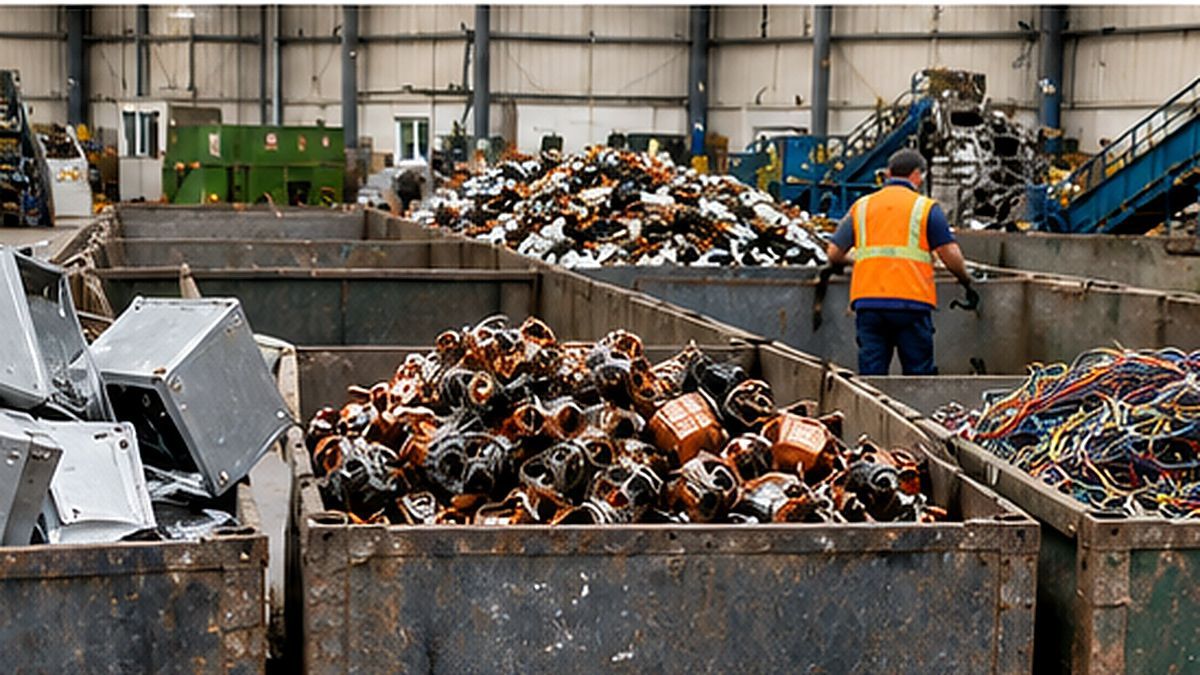
The crew lifts and carries but does not touch the plumbing, so the machine needs to be disconnected before they arrive. It then goes to a licensed waste transfer station or treatment facility, where the steel, plastics, cables and motor are separated for recycling and the counterweight is taken out. A sound working machine may be passed on for reuse where possible, and you can read what happens to your appliance after collection.
Whoever you choose, ask for their waste carrier licence number and check it on the public register (the Environment Agency in England, SEPA in Scotland, Natural Resources Wales or NIEA in Northern Ireland). You have a duty of care for your waste, and fly-tipping is a criminal offence, so a machine dumped by someone you paid can come back to you. Ours is upper tier licence CBDU526130, and we can tell you where the machine went.
Questions people ask
Can I put an old washing machine out with the bins?
No. A washing machine is electrical waste and should never go in a household bin or out with general rubbish. Book a council bulky collection, take it to the tip, or use a registered waste carrier.
Do I need to put the transit bolts back in?
Not for disposal. Transit bolts protect the drum when a machine is moved to be used again. A machine going for recycling does not need them.
Will you disconnect the washing machine for me?
No. Our crew lifts, carries and loads, and does not touch the plumbing or the electrics. If it is still connected, book your plumber first and we collect once it is free.
Why is my washing machine so heavy?
Most have a concrete or similar counterweight fixed inside to keep the drum steady on spin. That weight is why moving one safely, especially on stairs, needs two people.
Ready to see the back of it?
Fill in the form and we reply with a fixed price for carrying the washing machine out of your home. Then send us a picture so the price is right first time.
- Licensed waste carrier
- Fixed price from a photo
- Two-person crew and van
- Same or next day where possible

Get a fixed price from a photo
Fill this in and we reply by email with a fixed price. Then send us a photo of the appliance so the price is right first time.
Sent.
No email app on this device? Send the photo to hello@appliance-removal.co.uk with your postcode.